
I genuinely cannot remember the last time I went to Google because I needed an answer.
My own Google usage has probably fallen by more than 95%. I still occasionally use it to check how one of our websites ranks or how something appears in search. But when I need to research a market, find a company, compare products, understand an industry, analyze a document, find a person, write something or build something, I increasingly just tell an AI what I want.
I don't think this is simply a change in search behavior. I think we are watching the beginning of a fundamental restructuring of the Internet.
For the first thirty years of the commercial web, companies built primarily for humans. The next Internet has two customers: humans, and agents acting on behalf of humans.
Search is becoming an answer
The original Google interaction was simple: you had a question, Google gave you links, you opened several websites, and you figured out the answer.
QUERY → GOOGLE → WEBSITE → HUMAN → ACTION
AI collapses the middle of that process.
INTENT → AI → ANSWER
And soon: INTENT → AI AGENT → ACTION
THE CLICK IS DISAPPEARING
Pew Research Center analyzed 68,879 Google searches from U.S. adults. Without an AI summary, users clicked a traditional result on 15% of visits. With an AI summary, that fell to 8%. Only 1% of searches with an AI summary produced a click on a citation inside the summary.
The same study found that users ended their browsing session after 26% of searches with an AI summary, compared with 16% without one.


Longer, more complex searches were also much more likely to generate AI summaries: 8% of one- or two-word searches, 53% of searches with ten words or more, and 60% of searches phrased as questions.

This is not simply Google losing to ChatGPT. Google itself is becoming AI. The bigger transition is search → answers → agents.
We are moving from searching to delegating
Searching requires me to do the work. Delegating means I describe the outcome.
Imagine I type: Best CRM for a 20-person venture capital team.
Traditional search gives me webpages. AI can summarize them. But an agent eventually does something different:
Find the best CRM for our firm. Compare pricing and integrations. Check which works with our existing tools. Create an account. Import our contacts. Configure the pipeline. Give the team access. Tell me when it's finished.
Now the AI doesn't have a question. It has a job.
The Internet has a second audience
Cloudflare recently used a phrase every founder should pay attention to: the Internet has a second audience.
+1,700%
Growth in daily AI-agent requests on Cloudflare's network over the past year. Cloudflare also reported that in 2026, for the first time, more than half of Internet traffic was non-human.
Software is beginning to browse the Internet. Software is comparing products. Software is interacting with other software. Software is buying things. Software is beginning to perform jobs.
Software is becoming an economic actor.
The website is becoming the wrong abstraction
Many founders are still asking: What should our website look like?
The better question may increasingly be: How does an AI use our company?
THE OLD INTERNET
Human → Google → Website → Human action
THE AGENT INTERNET
Human intent → AI Agent → API / MCP → Company infrastructure → Action
Can the agent discover your product? Can it understand your capabilities? Can it authenticate? Can it retrieve pricing? Can it call your API? Can it execute actions? Can it buy, book, configure or monitor something?
If the answer is no, the agent may simply choose another company.
MCP may be one of the HTTP moments for agents
One emerging answer is Model Context Protocol. MCP gives AI systems a standardized way to discover tools and interact with external systems.
The protocol itself may evolve or be replaced. The important part is the behavior shift.
~500 MILLION
Tier-1 MCP SDK downloads per month by July 2026.
1B+ TypeScript cumulative downloads
1B+ Python cumulative downloads
For software companies, APIs and agent interfaces are moving from back-end infrastructure toward something closer to a storefront for machines.
PostHog is a good example
PostHog is the kind of company that illustrates where this goes. Historically, a human opened dashboards, investigated product behavior, queried analytics and changed settings manually.
As agent access improves, the AI does not necessarily need the dashboard. It needs the capabilities underneath it.
That changes PostHog from a product a human operates into infrastructure an intelligence can call.
The next distribution war is agent discovery
We spent decades optimizing for SEO: Can Google find us?
Then came social: Can we get into the feed?
The next questions are different:
- Can an AI understand exactly what we do?
- Can it determine when to recommend us?
- Can it connect to us?
- Can it transact with us?
Being mentioned by AI is useful. Being usable by AI is more important.
THE DISTRIBUTION STACK
SEO — Can Google find you?
↓
GEO / AEO — Can AI understand and recommend you?
↓
Agent discovery — Can AI determine what you can do?
↓
Agent access — Can AI connect to you?
↓
Agent transaction — Can AI actually execute?
AI traffic is already becoming real traffic
Similarweb estimates that generative-AI platforms drove an average of 770.7 million referral visits per month worldwide between June 2025 and May 2026, up 117.4% year over year.
Marketplaces averaged 46.8 million monthly AI referral visits, while News and Travel averaged 44.5 million each. Marketplace referrals increased from 33.2 million in June 2025 to 89.9 million in May 2026.

Beauty grew 312.5% year over year. Fashion grew 278.2%. Marketplaces grew 237.3%.
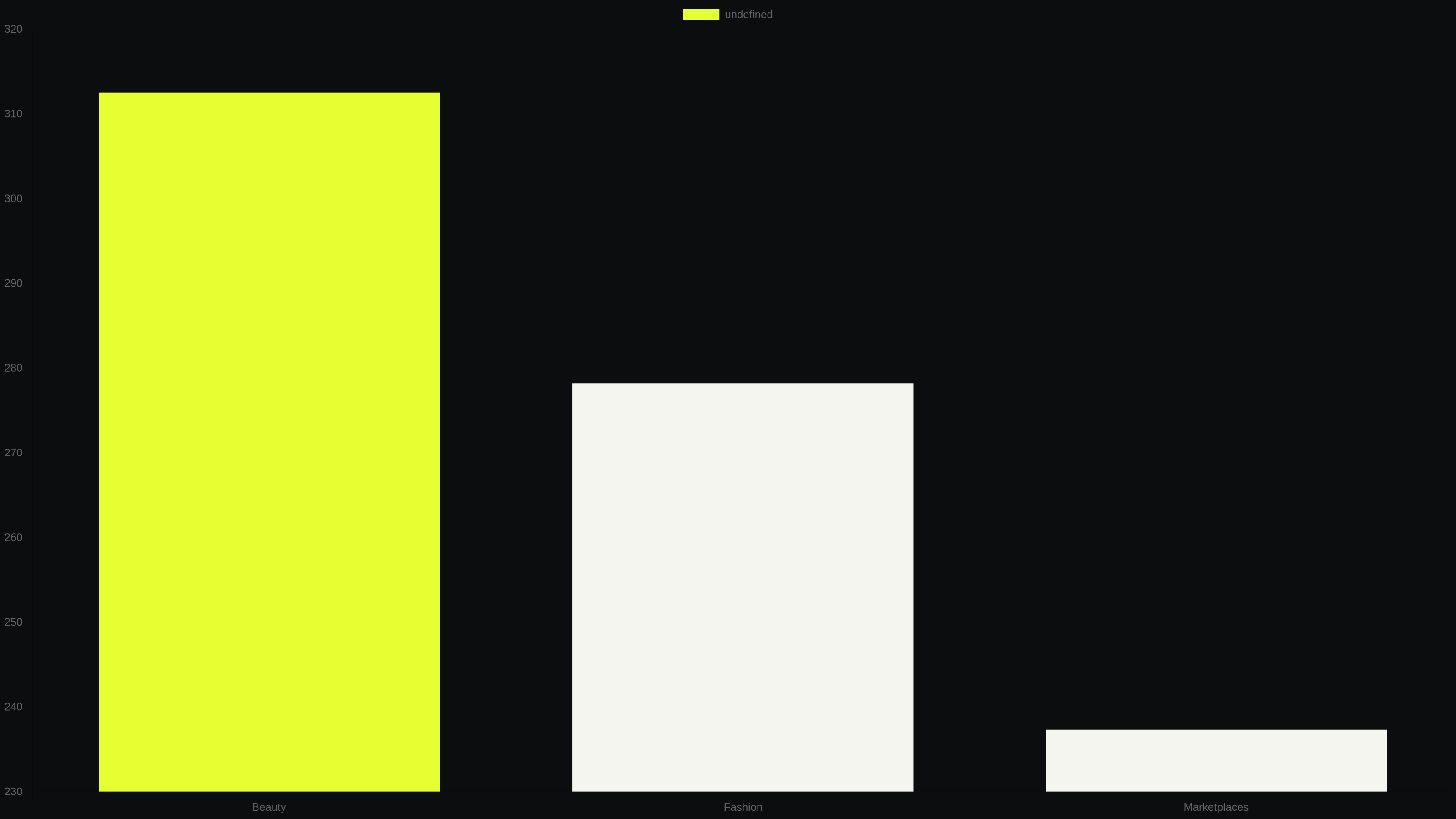
This matters because these are categories where the AI often has to hand the customer somewhere to finish an action: read, buy, book or transact.
770.7M
Average AI-driven website referral visits per month worldwide.
+117.4% year over year.
The most important startup question
IF AI BECOMES 100× MORE CAPABLE, DOES YOUR COMPANY BECOME MORE VALUABLE OR LESS VALUABLE?
If your product is primarily generic text generation, summarization, research, basic analysis, simple coding or basic workflow orchestration, you should assume frontier models will keep getting better at doing that work themselves.
The more interesting companies own something intelligence itself does not own:
- Proprietary data. The model can reason over the dataset. It does not automatically own it.
- Systems of record. AI can reason about customers; someone still owns authoritative state.
- Identity and permissions. Intelligence does not automatically equal authorization.
- Payments and transaction rails. Someone still has to move the money.
- Inventory and logistics. AI cannot hallucinate physical inventory into existence.
- Regulatory authorization. Knowing what should happen does not mean an agent is legally permitted to execute it.
- Trusted marketplaces and networks. AI can identify supply and demand; a network can own access to both.
- Physical infrastructure. Power, compute, robotics, warehouses, telecommunications, transportation and factories become more important, not less.
The AI value map
I would divide companies into four groups:
- AI can't recreate it + AI has to call it: the strongest position.
- AI can recreate it + AI has to call it: useful, but exposed.
- AI can't recreate it + AI doesn't need it: defensible but potentially peripheral.
- AI can recreate it + AI doesn't need it: the most fragile position.
The category I want to look for is simple: build something AI has to call.
Build something AI has to call
An identity layer for agents. A payment rail for autonomous transactions. A verified private-company database. A global manufacturing-capacity API. A healthcare diagnostics network agents can book. A compliance engine an agent must query before executing regulated activity. A logistics marketplace agents use to move physical goods. Infrastructure that lets agents access robots, factories or the physical world.
These businesses do not compete with intelligence. They give intelligence capability.
The new founder checklist
- Can an AI discover us?
- Can it understand exactly what we do?
- Is our data machine-readable?
- Do we have an API?
- Should we have an MCP server?
- Can an agent authenticate?
- Can a customer delegate permissions to an agent?
- Can an agent execute the primary action our product exists to perform?
- Can it retrieve pricing and availability?
- Can it purchase or transact?
- Can it determine whether the action succeeded?
- Can another agent call us without a human opening our website?
- What do we own that the model cannot simply recreate?
From pageviews to agent revenue
Companies are going to measure very different metrics.
Yesterday: pageviews, visitors, time on site, Google rankings, clicks, app installs.
Tomorrow: agent requests, agent discoveries, agent recommendations, tool calls, API executions, agent transactions, machine customers.
And perhaps the most interesting metric of all:
AGENT-GENERATED REVENUE
How much money did your company make this month from actions initiated by AI?
The website isn't dead
Humans aren't disappearing. Websites aren't disappearing. Google isn't disappearing. Apps aren't disappearing.
What is changing is the abstraction layer.
For the last twenty years, we personally operated software. We logged into dashboards, searched marketplaces, compared products and navigated dozens of applications.
Increasingly, we may simply express intent: Do this for me.
And the AI will operate the underlying systems.
The AI becomes the interface. Everything else becomes infrastructure.
Your next customer may never visit your homepage. They may never see your logo. They may never press your buttons. They may simply tell their AI what they want—and the AI will decide which company can deliver it.
Your next customer isn't necessarily human. Make sure your company is ready for them.



.svg)