
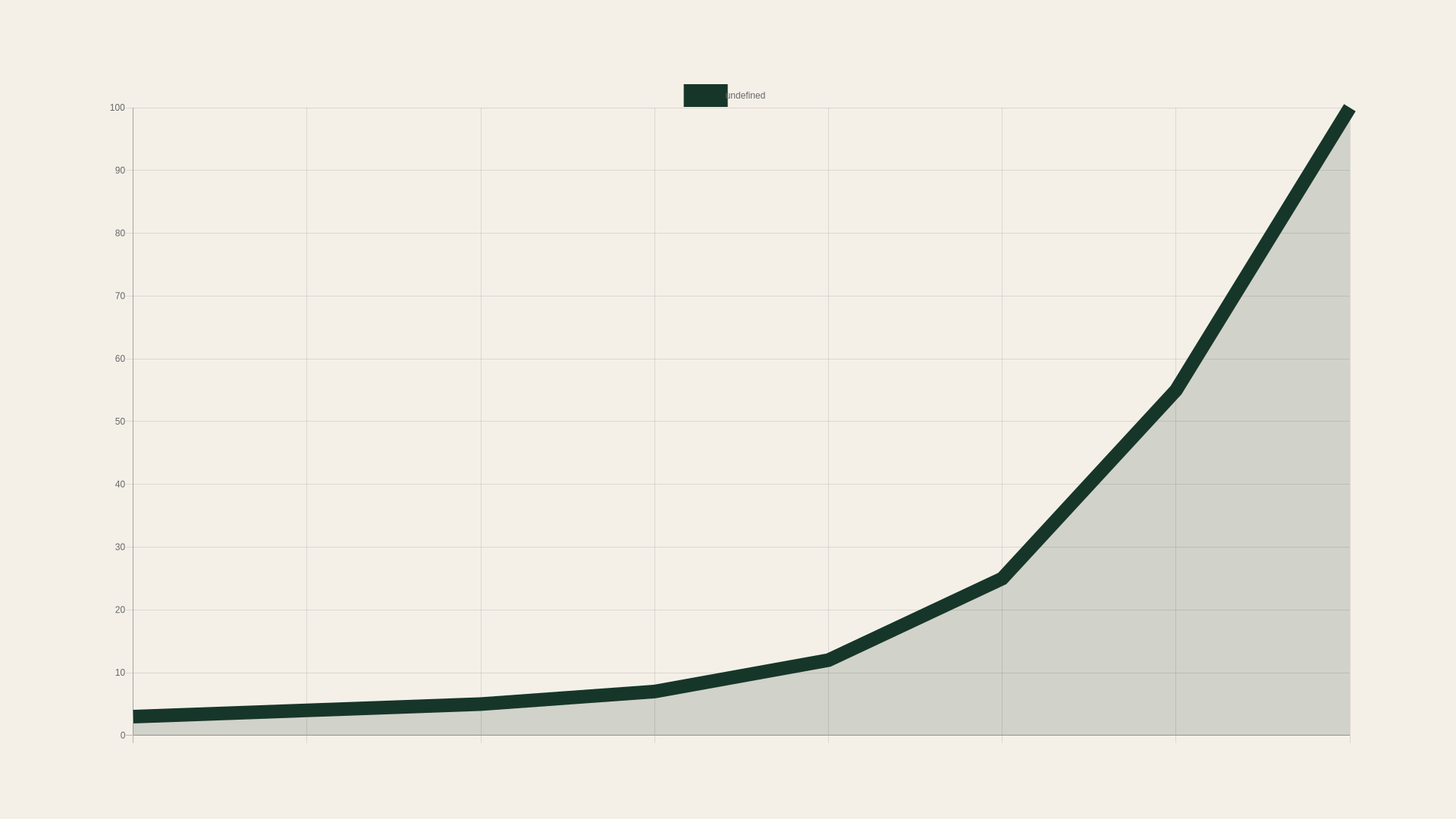
There is a massive difference between being good, being elite and being so exceptional that the normal distribution almost stops being useful.
We talk about the top 10 percent, the top 1 percent and then, rhetorically, the 0.0000001 percent. That last number is not a measured entrepreneurial percentile. It is a way of describing the extreme tail: the people whose output, intensity, talent, timing and capacity to compound are so unusual that comparing them with the average person becomes almost meaningless.
This matters because a lot of entrepreneurship policy is built around an assumption that exceptional founders can be manufactured at scale. Put enough people through workshops, accelerators, hackathons and startup weekends, and eventually you will somehow produce a Bill Gates.
I do not think that is how the world works.
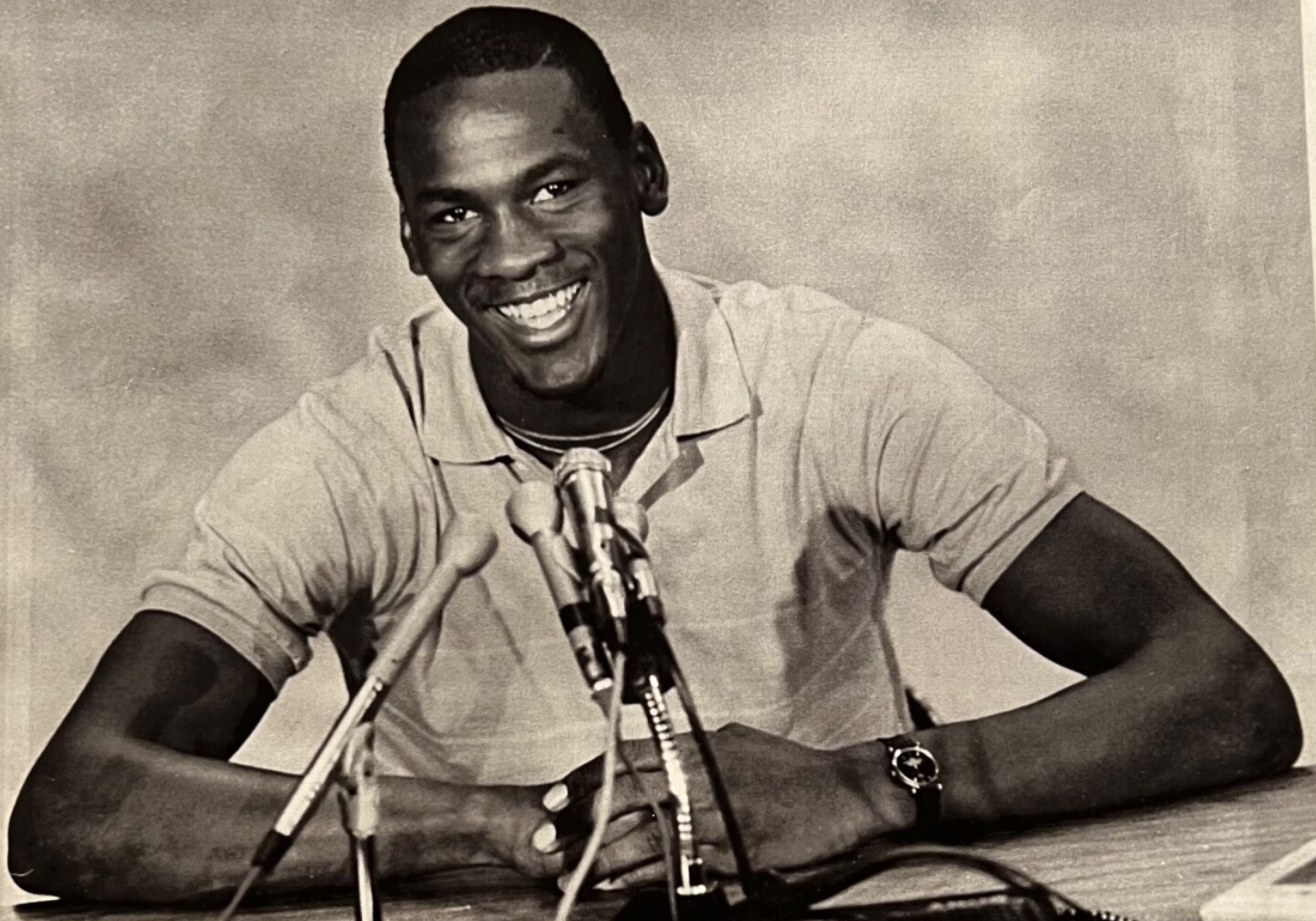
You can build the field. You cannot manufacture Michael Jordan.
Governments should absolutely invest in entrepreneurship. They should improve education, remove regulatory friction, fund research, make capital available, connect companies to customers and create environments where ambitious people can move faster.
But infrastructure and outliers are not the same thing.
Korea is a useful analogy. The Korean government has invested heavily in the broader content economy, including policy finance, export infrastructure and direct support for music companies seeking overseas expansion. That can make the field deeper. It can give more people training, distribution and a shot. It cannot guarantee the next BTS, just as a basketball academy cannot guarantee the next Michael Jordan.
The same is true of founders.
Entrepreneurship programmes can increase the number of people who know how to start, sell, hire, budget and survive. There is evidence that some forms of business training improve outcomes. A World Bank review found positive average effects from business training, while a randomized trial in Togo found especially strong results from personal initiative training. That is valuable.
But improving the average is a different problem from producing the extreme tail.
The mistake is treating every founder like the same raw material
We like democratic stories about success. They are emotionally attractive. Work hard, follow the framework, find a mentor, build the deck, raise the round, repeat.
At a basic level, this is good advice. Most people can improve enormously. Most founders can become better operators. Most companies can benefit from better sales discipline, financial controls, recruiting and strategy.
But the extreme performers are not simply ordinary performers with a better checklist.
Michael Jackson was performing professionally as a child and released Thriller at 24. Michael Jordan entered the NBA at 21 after already becoming a national college star. Bill Gates was programming as a teenager and was 19 when Microsoft began in 1975. Elon Musk started Zip2 in his mid twenties.
By the time the rest of the world sees these people, they often look like overnight successes. They are not. The visible breakout sits on top of years of abnormal obsession, repetition and output.


There are two routes to the extreme tail
My original instinct was that success clusters in two age windows. The first is the prodigy window, usually in the late teens or twenties. The second is the experienced builder window, usually in the thirties and early forties.
The data forced me to modify that view.
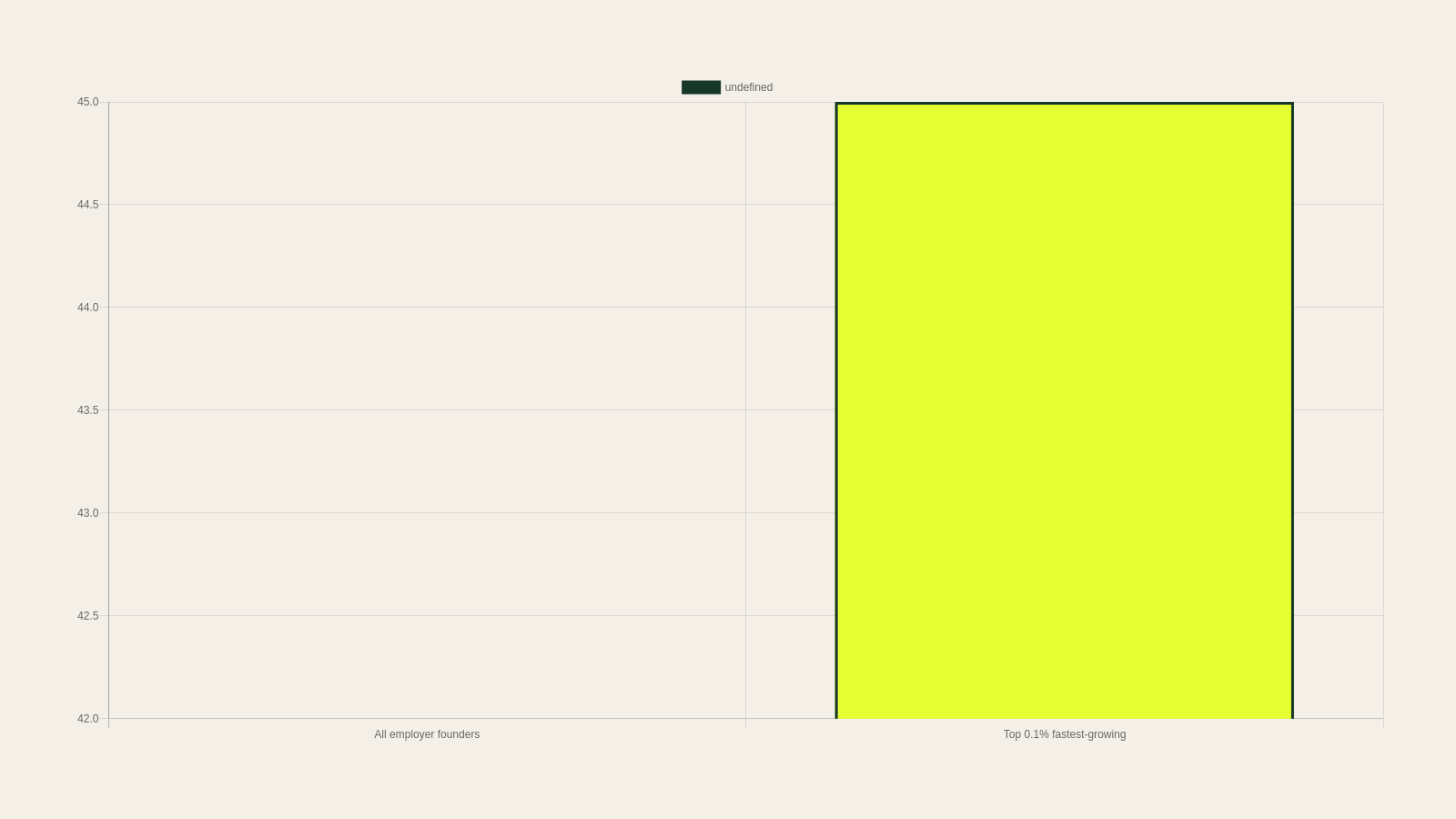
The distinction is real, but the second window is wider than startup mythology suggests. Research using U.S. Census Bureau administrative data on more than 2.7 million founders found that the mean age of founders was 42. For the fastest-growing one in 1,000 new ventures, the mean founder age was 45.
That is not a small correction. It flips the stereotype.
So I would describe the two routes differently.
Route one is precocious obsession. These people find their arena absurdly early. They accumulate thousands of hours while their peers are still sampling possibilities. Gates had access to computers in school when that was extraordinarily rare. Jackson was performing before most children understand what a career is. Jordan's competitive intensity was already visible long before his first NBA championship.
Route two is accumulated leverage. These people spend years building industry knowledge, judgment, credibility, networks and scar tissue. Then they strike.
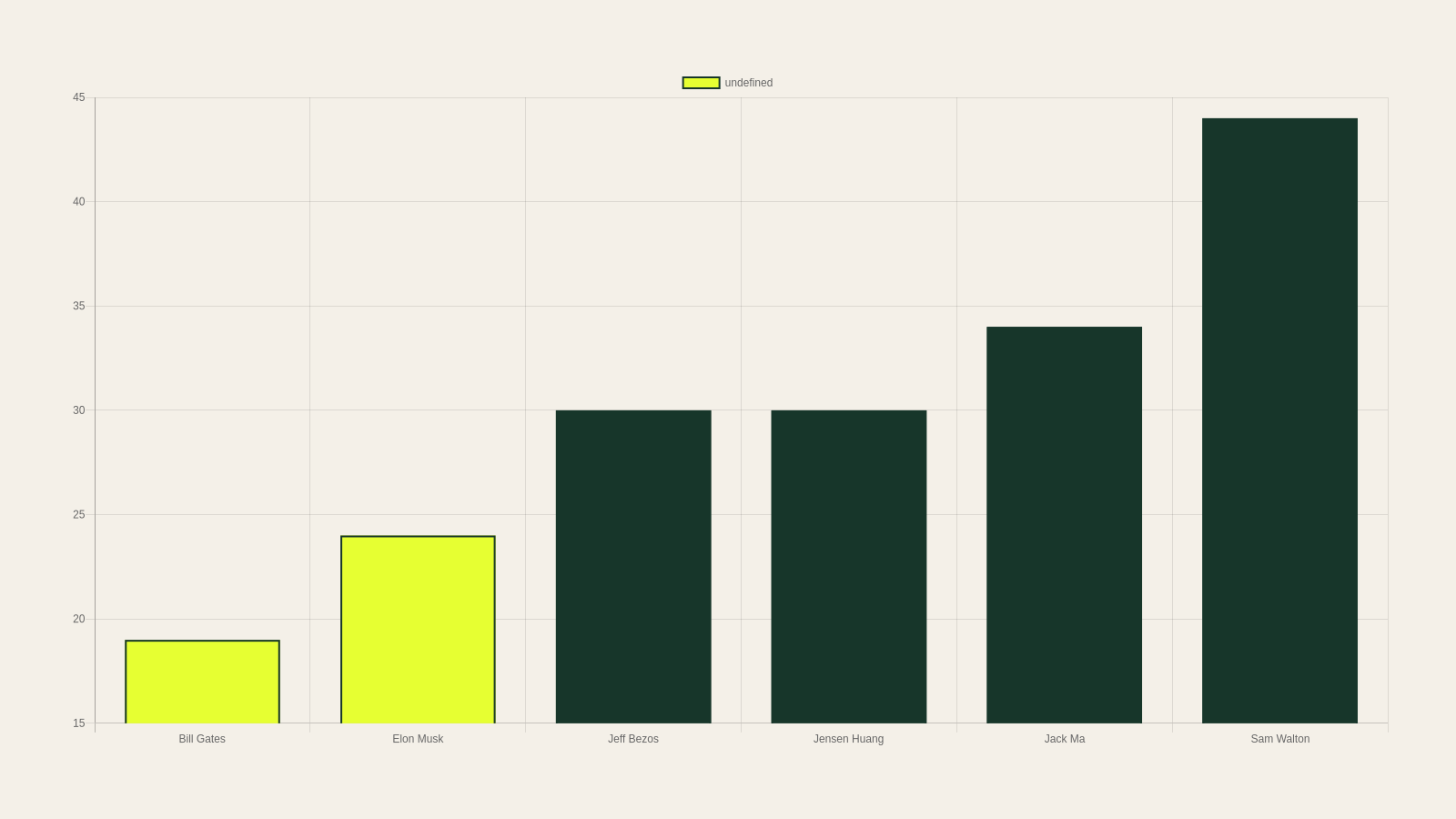
Jeff Bezos founded Amazon at 30 after Wall Street and technology experience. Jensen Huang founded NVIDIA at 30 after working at AMD and LSI Logic. Jack Ma was 34 when Alibaba was founded, after teaching English and trying earlier internet ventures. Sam Walton opened the first Walmart at 44 after years in retail.
The second route may actually be the more common entrepreneurial route
This is where founder culture gets confused by celebrity.
Young prodigies are memorable because they make better mythology. A teenager drops out, sleeps under a desk, writes code all night and becomes a billionaire. It compresses beautifully into a movie.
The 42-year-old who spent fifteen years learning a supply chain, watched customers suffer from the same problem for a decade, built relationships across an industry and then launches a company is less cinematic.
It may also be closer to the statistical norm for high-growth entrepreneurship.
The NBER study found that industry experience matters. Founders with at least three years of experience in the same broad industry had roughly twice the rate of extreme-growth success as founders with no experience in that industry.
That is accumulated leverage in data form.
What the outliers have in common is not age. It is intensity.
Age separates the pathways. Intensity connects them.
Look across sport, music and business and you repeatedly find people who behave in ways that would look unreasonable if the result did not later justify them. They practice longer. They stay with problems longer. They are more competitive. They tolerate repetition. They care about details normal people cannot see. Their internal standard is usually far above the external standard.
This is why I am skeptical when people talk about creating entrepreneurial culture as though entrepreneurship were mostly a matter of events and inspiration.
You can create exposure. You can create access. You can create infrastructure. You can create incentives.
You cannot insert obsession into somebody.
You cannot give somebody Michael Jordan's competitive wiring in a twelve-week programme.
You cannot make somebody care about a product at 2 a.m. when nobody is watching.
You can teach skills. You can improve probability. You cannot mass-produce abnormal drive.
The better policy question is not “How do we create entrepreneurs?”
The better question is: how do we build a system that finds exceptional people early, gives them room to move and does not slow them down?
That changes the design of an entrepreneurship ecosystem.
You still want broad participation because you do not know in advance where talent will come from. You still want training because average capability matters. You still want accelerators, universities, capital and community.
But the system should also become much more selective at the top.
The job is not to pretend all participants have equal upside. The job is to give thousands of people a fair shot, observe who demonstrates unusual speed, resilience, customer pull, learning rate and output, then concentrate resources around the ones who keep breaking the model.
Sports understand this intuitively. Millions play basketball. Fewer make elite youth programmes. Fewer make college. Fewer make the NBA. One becomes Michael Jordan.
That is not unfair. That is what a talent distribution looks like.
Do not confuse equal opportunity with equal expected outcome
Entrepreneurship policy should widen the funnel aggressively and narrow it honestly.
Give more people computers, capital, mentors, markets and permission to try. Then measure output. Who ships? Who sells? Who learns? Who survives? Who compounds unusually fast?
The purpose of the ecosystem is not to certify that everybody is exceptional. The purpose is to make sure exceptional people are not missed, while helping everybody else become better than they would have been without the system.
That distinction matters.
Because the top 10 percent can be trained to become stronger. The top 1 percent can often be accelerated dramatically. But the microscopic extreme tail is a different phenomenon. Those people often reveal themselves through a level of output that is difficult to fake and even harder to sustain.
We should stop promising to manufacture them.
We should get much better at recognizing them.
Sources and methodology
NBER: Age and High Growth Entrepreneurship. Administrative data on U.S. founders and high-growth firms.
NBER Digest: When It Comes to Entrepreneurs, Youth Isn't Everything. Founder-age and industry-experience findings.
Microsoft: The History of Microsoft, 1975.
NBA: Michael Jordan legend profile.
NVIDIA: Jensen Huang biography.
Alibaba Group: company history.



.svg)