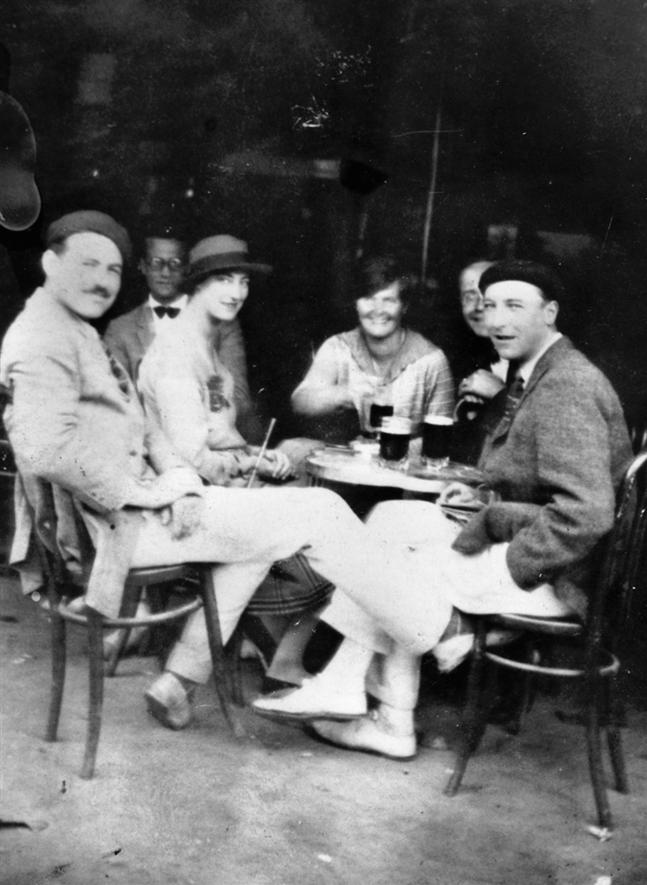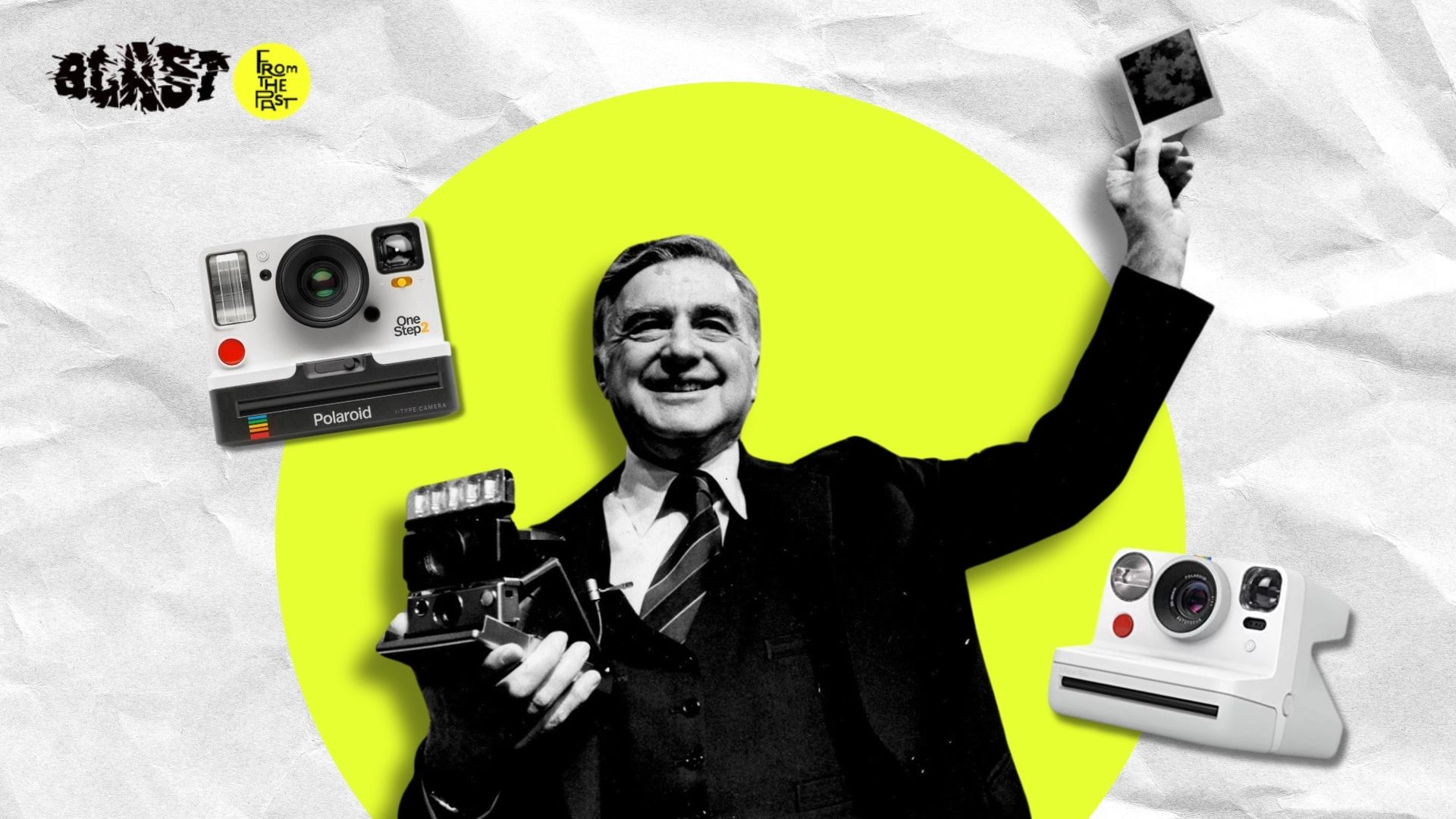

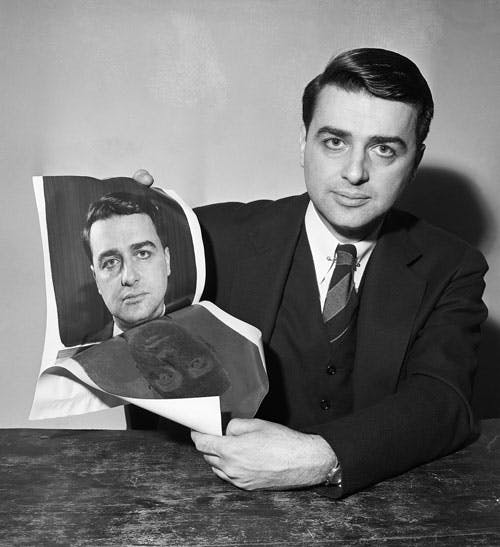
Did you know that Edwin Land got the idea of Polaroid when his 3-year-old daughter requested to see a photo instantly after he clicked it?
This sparked the idea of developing instant film technology.
Polaroid cameras revolutionized photography by allowing users to capture and develop images instantly.
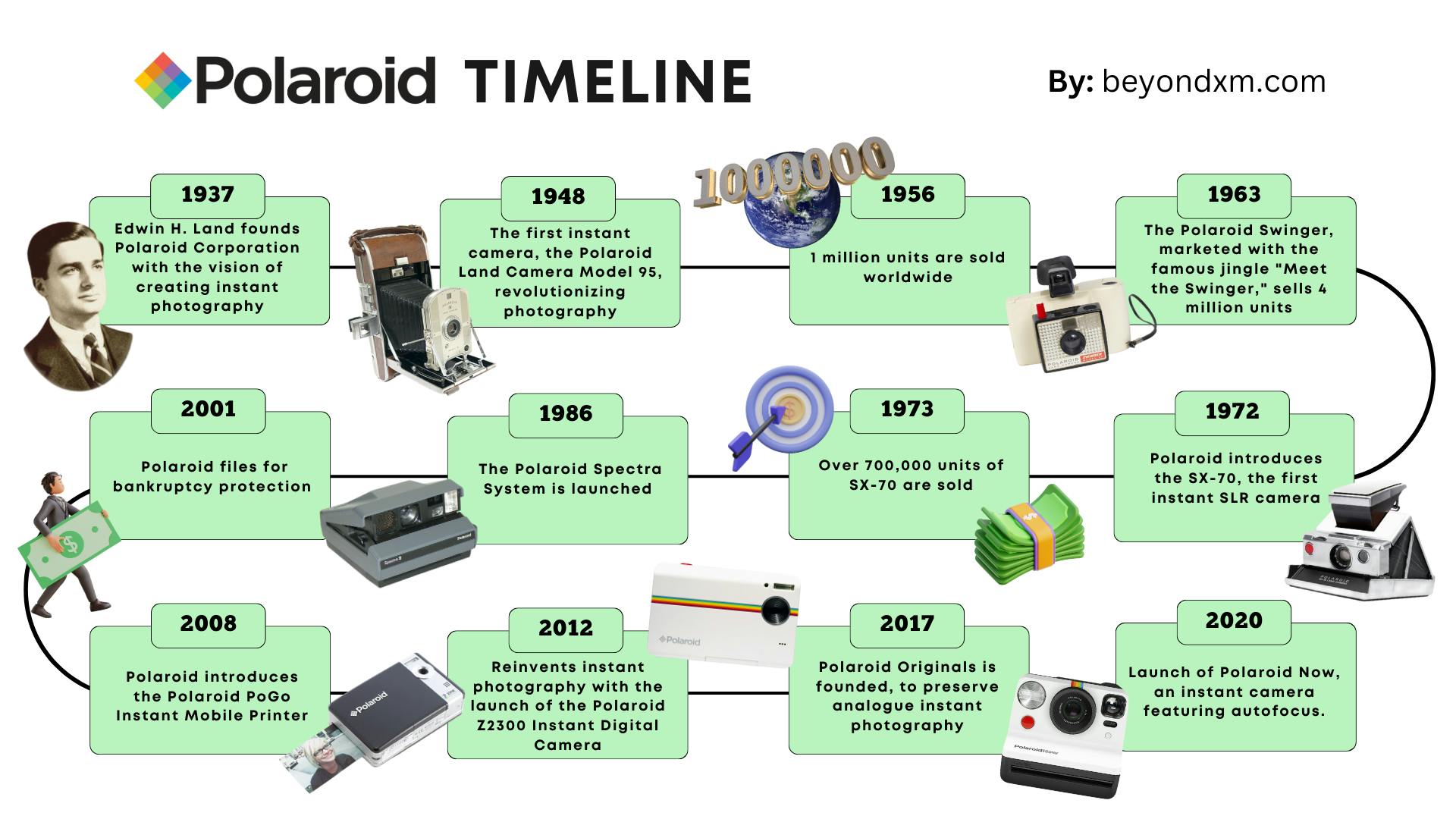
Edwin Land founded Polaroid Corporation in 1937, driven by his vision to create a camera that could produce instant photographs.
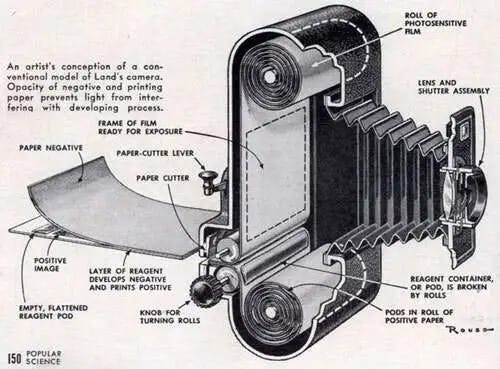
He started building a darkroom in a box and, within a few years, Polaroid released the first instant camera.
The First Polaroid wasn’t called a Polaroid but rather the “Land Camera”, named after its inventor Edwin Land, it was first demonstrated at a meeting of the Optical Society of America in February of 1947.
A year later the camera went on sale for public, just in time for Christmas 1948. with a small batch of only 50 cameras.
The convenience of instant photography eliminated the need for traditional film processing, making Polaroid cameras popular for capturing candid moments and events.
So What Made Polaroid so Successful?
They continuously innovated its technology, introducing new camera models and film formats to meet evolving consumer needs.
Polaroid employed aggressive marketing tactics, including live demonstrations in stores and advertising in major magazines.
Despite the high price of $89.72, the first batch sold out quickly, demonstrating strong market demand.
In 1949, Polaroid made more than $5 million in camera sales alone!!
They Used These 5 Strategies Reshape the Industry
Did you know that during World War 2, Polaroid designed a night viewing device and colored filters for rangefinders and periscopes for snipers in the US Army?
- Product Diversification:
Polaroid diversified its product offerings beyond instant cameras and film, like digital cameras and Printers.
- Brand Licensing:
Leveraging its iconic brand through licensing agreements enabled Polaroid to expand into new markets and product categories.
- Revitalizing the Brand:
Collaborations with influencers, artists, and fashion brands helped Polaroid connect with younger audiences and become a lifestyle brand.
- Embracing Digital Technology:
Polaroid integrated instant photo printing capabilities into digital cameras and printers.
- Customer Engagement:
Polaroid prioritized Instagram to showcase user-generated content, hosted photo challenges, and interacted with followers, to build its brand.
Polaroid battled against 2 Key Challenges
- Technological Landscape:
Polaroid faced challenges in keeping pace with product evolution in traditional film.
It also had to keep up with the new emergence of offering digital cameras.
- Consumer Preference Shift:
Changes in consumer preferences towards digital photography.
The decline of instant film photography also posed a threat to Polaroid’s traditional business model.
3 Ways that Polaroid Reinvented itself:
- Focus on Core Business:
a. Polaroid streamlined its operations and refocused on its core instant photography business.
b. The company prioritized the development of new instant camera models and instant film formats to meet evolving consumer demands.
- Strategic Partnerships and Licensing: -
a. Polaroid licensed its brand to manufacturers producing digital cameras, printers, and consumer electronics, expanding its reach and diversifying its revenue streams.
- Embrace of Digital Technology:
a. Despite its roots in analogue instant photography, Polaroid introduced digital instant cameras and portable printers.
b. This hybrid approach bridged the gap between traditional and digital photography markets, allowing Polaroid to capitalize on both.