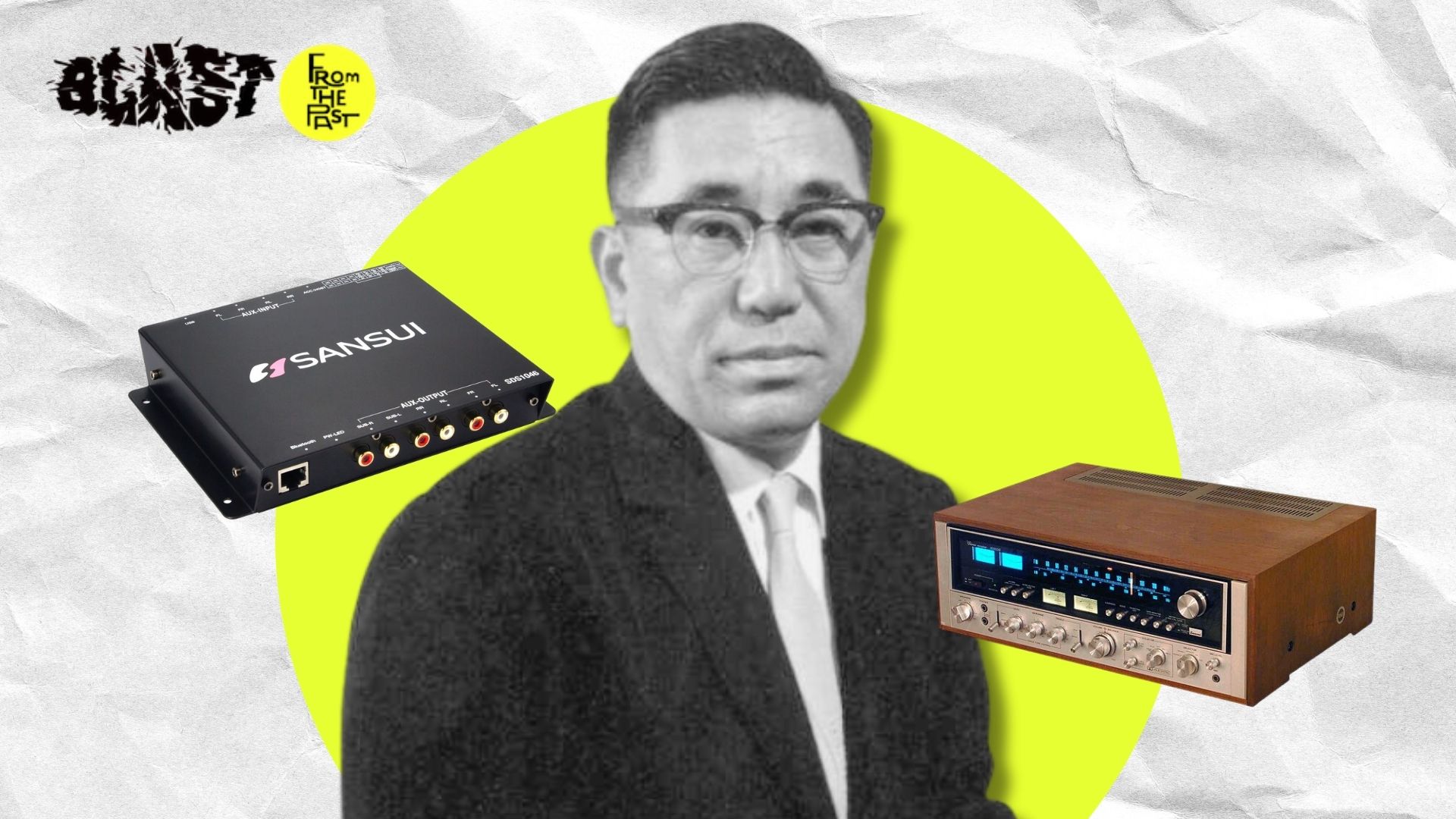

Did you know that Sansui is claimed to be the pioneer in surround sound technology?
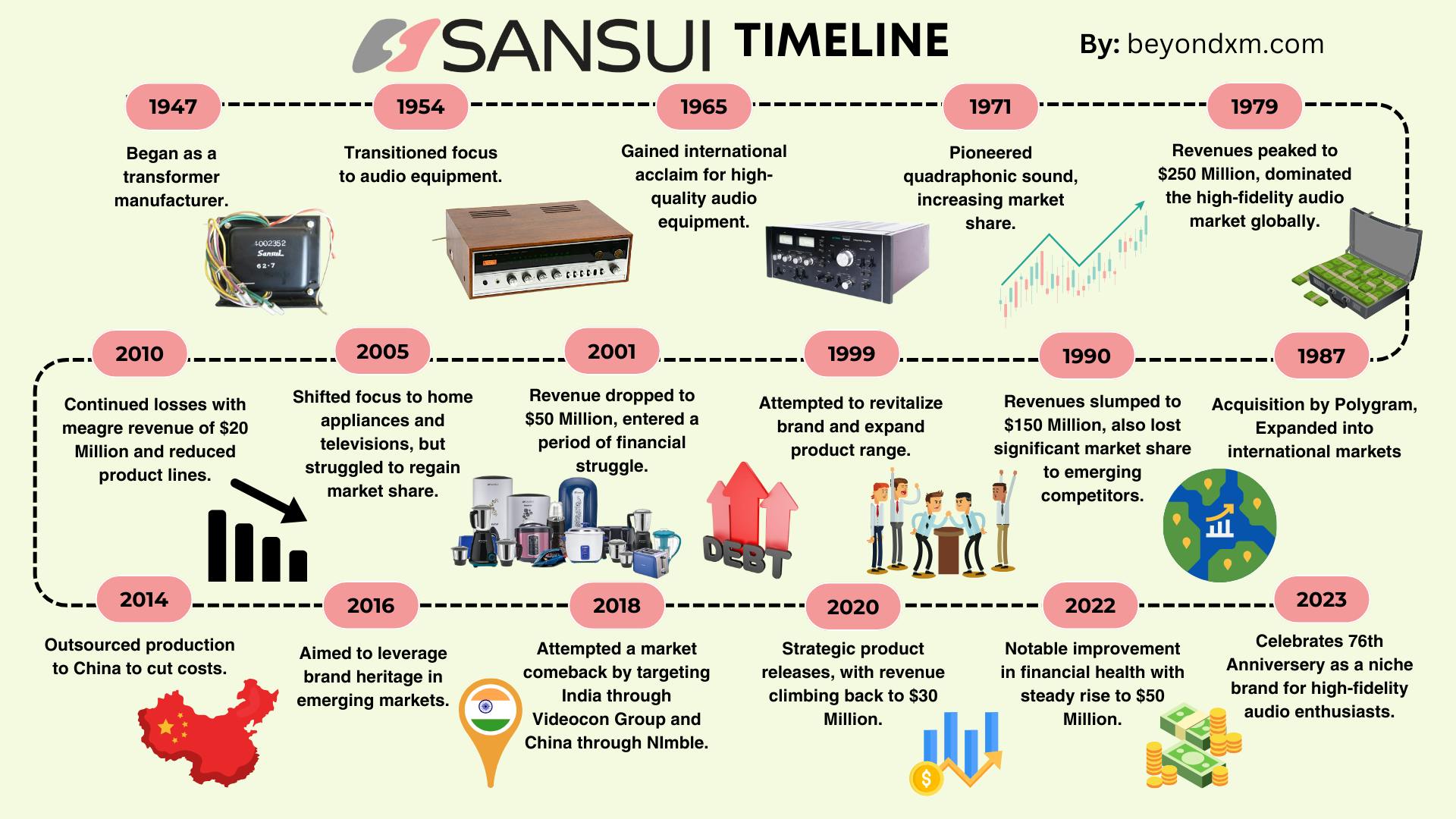
Sansui Electric Co., Ltd.,was established in 1947 Japan, it is renowned for its high-quality audio and video equipment.
Kosaku Kikuchi found the company with an aim for high-quality transformers, paving the way for its expansion into other audio equipment.
However, fuelled by Government contracts and interest, the company shifted focus to audio equipment in the 1950s, capitalising on the burgeoning demand for high-fidelity (hi-fi) audio systems.
Unique Value:
- It was known for producing amplifiers and audio equipment with unparalleled sound fidelity. Sansui products were particularly beloved by audiophiles for their clear, rich, and powerful sound.
- Consistently introduced innovative designs and features that enhanced the user experience, such as the “X-Balanced” amplifier circuitry.
- It comprehensively built a loyal customer base through reliable and high-quality products.
Did you know that the initial capital of Sansui Electric was 180,000 Yen ( $500.00 US at that time) with 10 employees.
Initial Success:
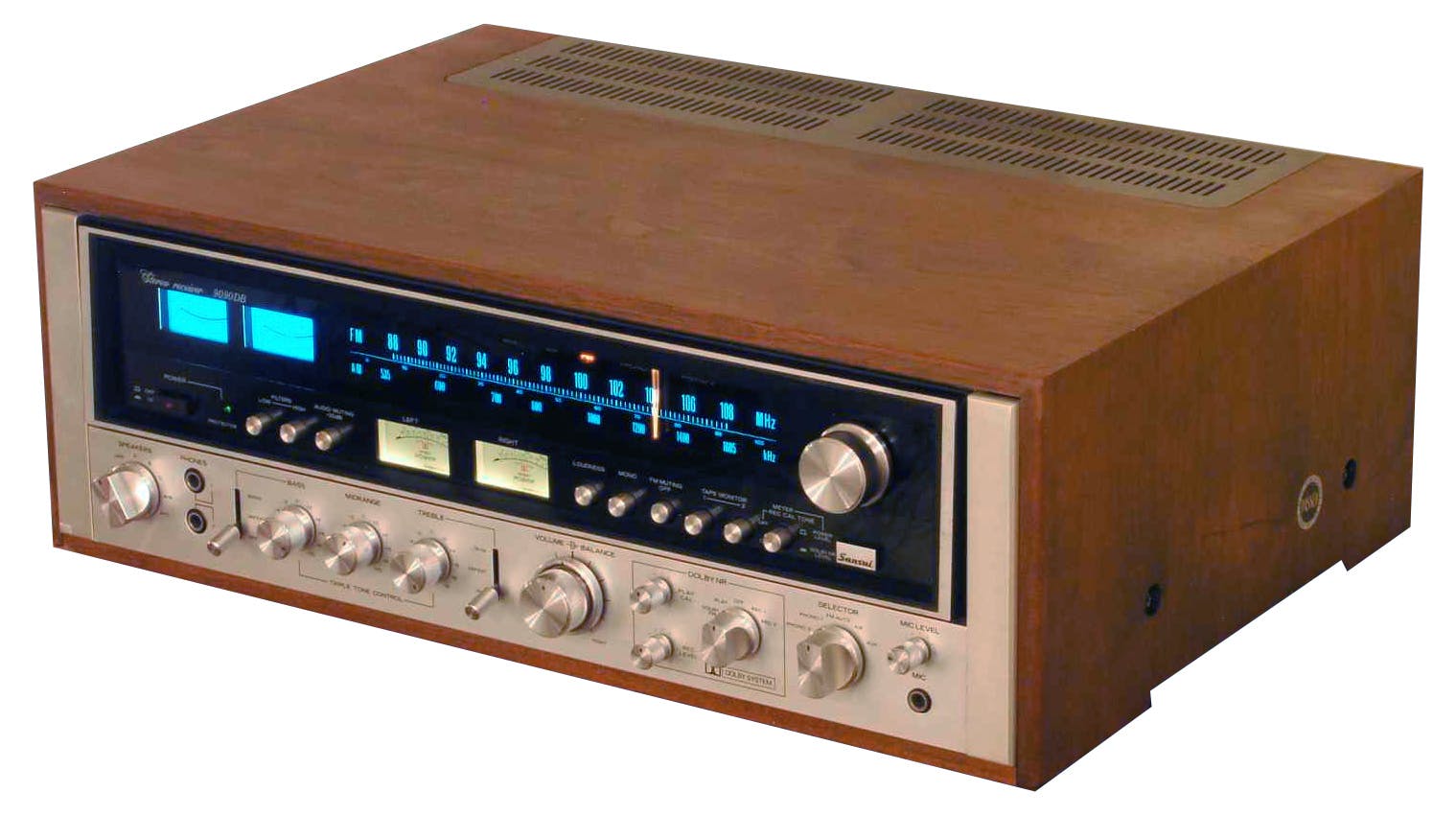
- Launched the AU-999 and AU-9500 amplifiers, known for their exceptional sound quality and durability.
- Enjoyed great season of sales and profitability, driven by strong demand in both domestic and international markets.
- Began exporting products to the United States and Europe, gaining international recognition for superior sound quality.
Peak Financial Highlight:
- During the early 1980s, Sansui reported robust revenue growth, with annual sales peaking at approximately $1 billion.
- Dominated the high-end audio market, competing with brands like Pioneer, Sony, and Marantz.
3 Major Challenges that Sansui faced over the years:
- Market Shifts and Competitive Pressure (Post 1980s):
- The rise of digital technology and the shift towards compact discs (CDs) and home theater systems challenged Sansui’s traditional product lines.
- Increased competition from emerging brands offering affordable and feature-rich products led to a decline in market share.
- Financial Struggles:
- Reported significant financial losses in the late 1980s and early 1990s, struggling to adapt.
- Faced difficulties in maintaining profitability, leading to downsizing and restructuring efforts.
- Management and Strategic Missteps:
- Frequent changes in leadership and inconsistent strategic direction challenged company’s ability to execute long-term plans effectively.
- Failed to capitalize on emerging trends such as portable audio devices and multimedia systems, which further eroded its market position.
4 Reasons Why Sansui lost $950 Million from its peak?
- Failure to Adapt to Market Changes: Sansui stuck to analog systems while competitors embraced CDs and digital audio.
- Takeaway for Startups: Stay agile and continuously monitor market trends. Being proactive in adopting new technologies can prevent obsolescence.
- Inconsistent Strategic Direction: Frequent changes in leadership led to inconsistent strategic directions holding long-term growth.
- Takeaway for Startups: Ensure a stable and coherent strategic vision. Leadership stability and a clear, long-term strategy are crucial for sustainable growth.
- Neglecting Core Competencies: Sansui diversified into areas where it lacked expertise, such as home appliances, diverting focus from its core strengths in audio equipment.
- Takeaway for Startups: Focus on core competencies and build on existing strengths before diversifying. Ensure any expansion aligns with the company’s expertise and brand identity.
- Ignoring Customer Preferences: Sansui failed to align its products with evolving consumer preferences, particularly in the transition to portable and multimedia audio devices.
- Takeaway for Startups: Prioritize customer feedback and market research. Develop products that meet the changing needs and preferences of your target audience.