
Did you know that Kodak once Introduced a camera at a price of just $1 in 1900 !!, It was famously called Kodak Brownie.
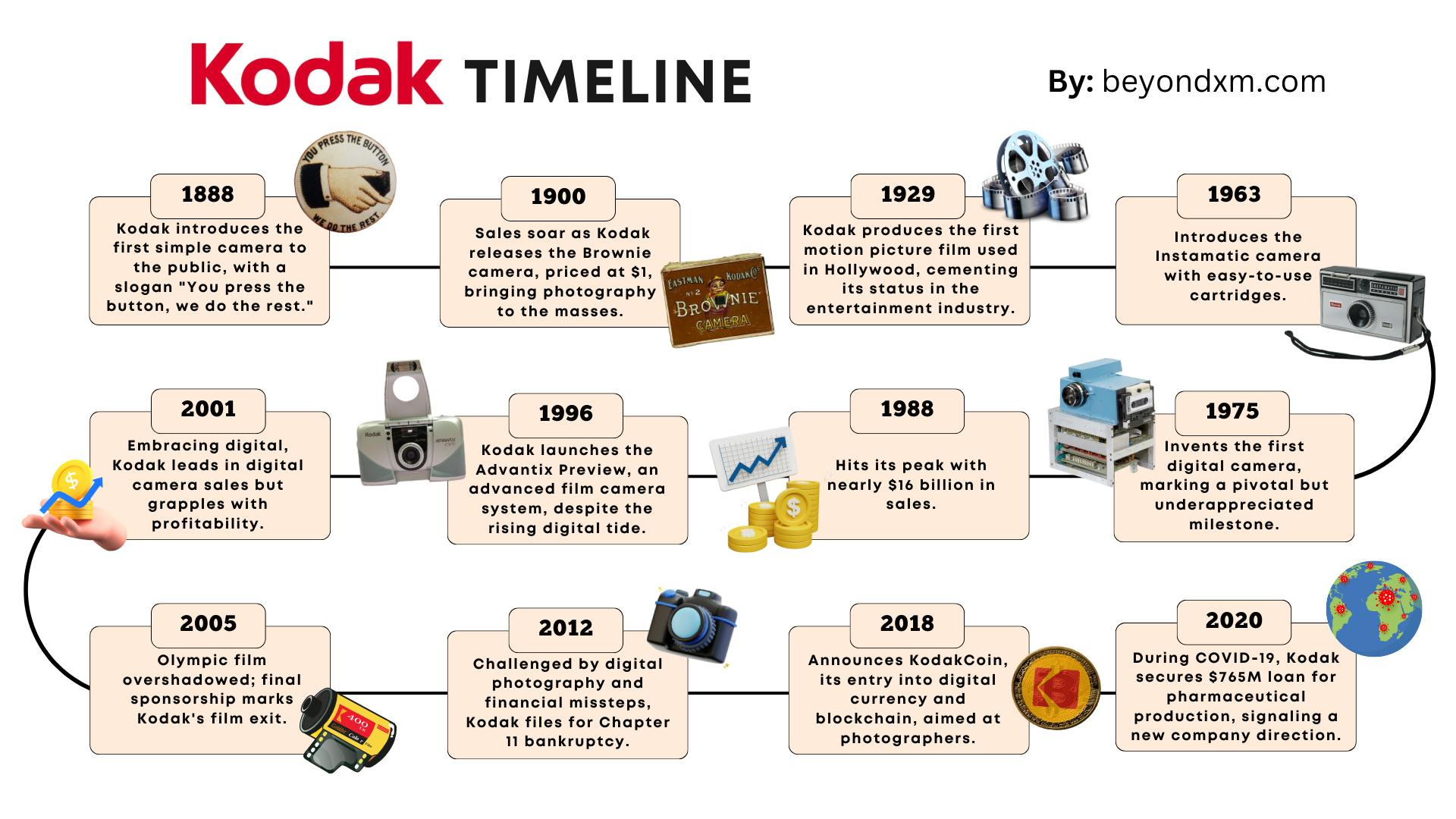
Kodak was founded in 1888 by George Eastman, with a vision to make photography accessible to the masses.
Eastman sought to simplify the complex process of photography and make it more convenient for amateur photographers.
What was so Unique about Kodak?
- Accessible Photography: Kodak introduced the first handheld camera, the Kodak No. 1, along with the slogan “You press the button, we do the rest,” making photography accessible to everyday consumers.
- Film Development Services: Kodak offered film development services, allowing users to send their exposed film rolls to Kodak for processing and printing, further simplifying the photography process.

What Made it an Instant Success?:
- Mass Production: Kodak pioneered mass production techniques, enabling it to produce affordable cameras and film in large quantities.
- Global Expansion: The company expanded its reach globally, establishing manufacturing facilities and distribution networks to serve customers worldwide.
- Brand Recognition: Kodak’s iconic brand and innovative products solidified its position as a leader in the photography industry, capturing the hearts and minds of consumers around the world.
Famous Highlights of this Iconic Brand:

Did You know that Kodak Introduced the First Digital Camera Prototype in 1975?
- Yellow Kodak Box: The introduction of the yellow Kodak film box became synonymous with photography, representing convenience and quality for consumers.
- Kodachrome Film: Kodachrome film, introduced in 1935, revolutionised color photography with its vibrant colors and exceptional image quality, becoming the preferred choice for professional photographers.
- Digital Photography Innovation: Kodak was an early pioneer in digital photography technology, launching consumer digital cameras in the 1990s.
- Peak Revenue: Kodak reached its peak revenue of over $15 billion in 1996, fuelled by strong sales of film products and imaging services.
Kodak faced a ton of Challenges at the start of 2000s:
- Digital Disruption: Kodak struggled to adapt to the shift from traditional film photography to digital photography, missing opportunities to capitalize on emerging technologies.
- Financial Strain: The company faced financial challenges due to declining sales of traditional film products and increasing competition from digital photography rivals.
- Lack of Innovation: Kodak’s foundation on traditional film products limited its ability to innovate and stay competitive in the rapidly evolving photography market.
Decline of a Pioneer:
- The company faced declining revenue and profitability in the early 2000s, driven by the rise of digital photography and declining demand for traditional film products.
- Kodak filed for bankruptcy protection in 2012, citing liabilities of over $6 billion, as it struggled to adapt to the digital age and compete with digital photography rivals.
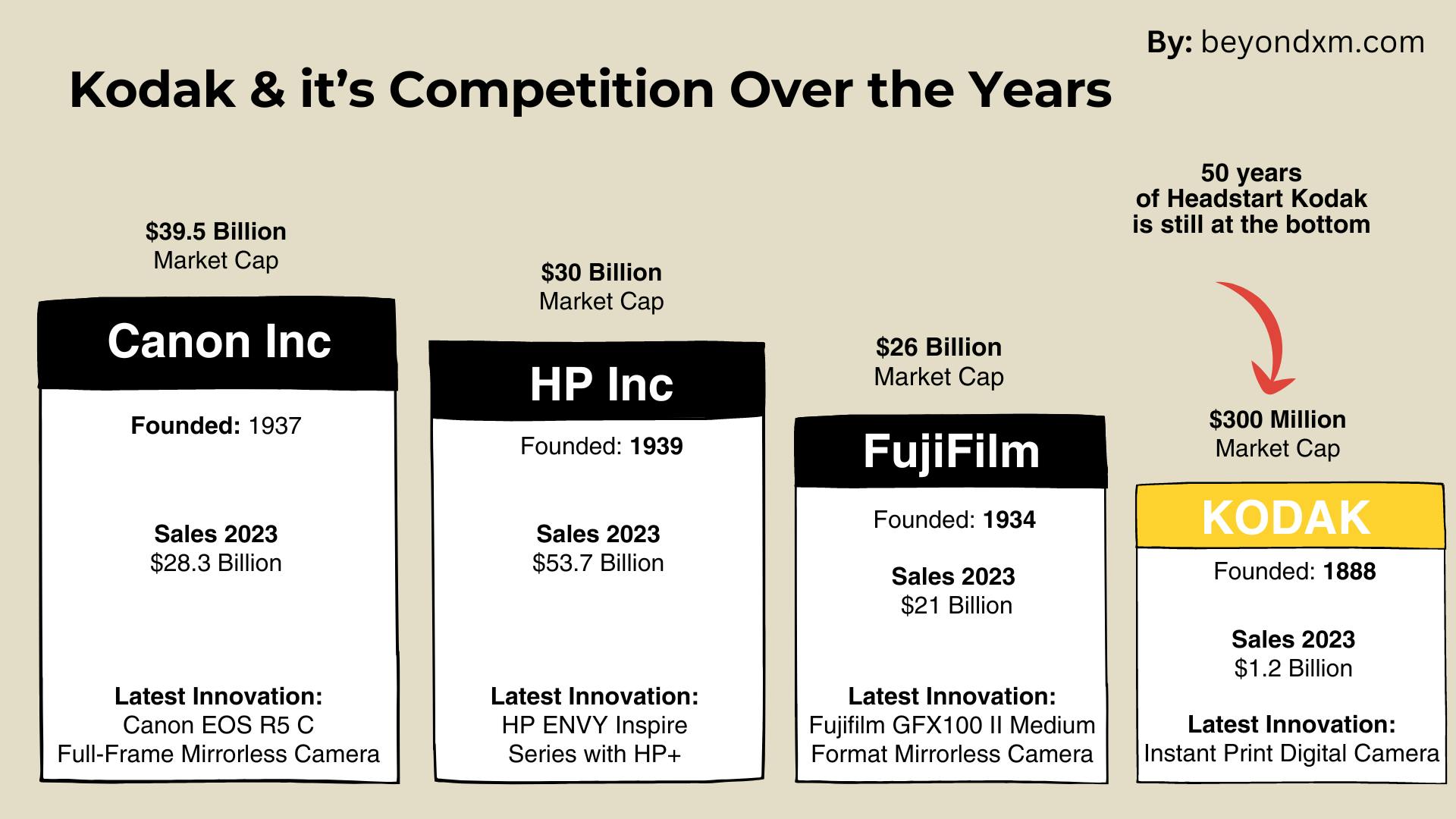
Kodak’s business saw its last revenue peak in 1996 at a height of $16 Billion while it closed last year at merely $1.11 Billion, almost a 93% slump from its glory days.
4 Things Startups can learn from Kodak’s $15 Billion loss:
- Brand Evolution: Kodak’s journey highlights the importance of brand evolution and adaptation to changing market dynamics. Startups should continuously assess their brand positioning and messaging to ensure relevance.
Perfect Example: Apple’s transformation from a computer manufacturer to a lifestyle brand with products like the iPod, iPhone, and Apple Watch.
- Digital Transformation: Kodak’s failure to effectively embrace digital photography highlights the critical need for startups to embrace innovation.
Perfect Example: Netflix’s successful transition from a DVD rental service to a global streaming platform exemplifies effective digital transformation.
- Customer-Centric Innovation: Kodak ignored customer needs and preferences, and lost out on opportunity to disrupt the Industry with consumer driven products.
Perfect Example: Amazon’s relentless focus on customer experience and innovation, evident in initiatives like Prime membership, one-click ordering, and Alexa voice technology.
- Strategic Partnerships: Kodak's struggled later on to forge the right complimentary partnerships in driving growth and innovation.
Perfect Example: Tesla's strategic partnership with Panasonic for battery technology and manufacturing has played a crucial role in the company's success in the electric vehicle market.