

Did you know that at its peak, Borders Loyalty program had 23 Million Subscribers?

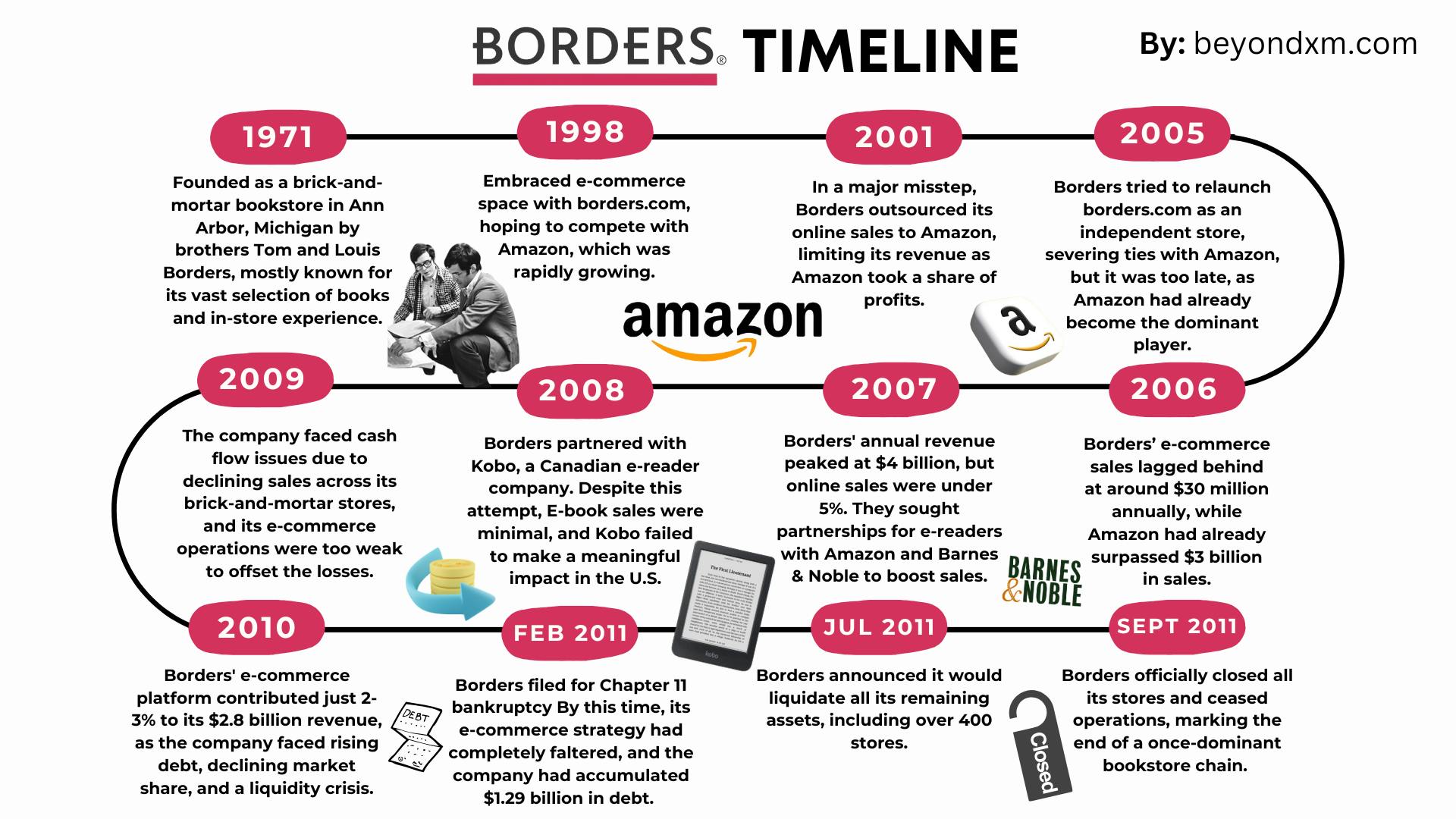
Tom and Louis Borders, two brothers from Ann Arbor Michigan, founded Borders as a used bookstore with a simple vision to create a space for book lovers.
The Physical stores, instantly filled in a gap in the market and led to expansion throughout the United States and internationally, establishing Borders as a household name in book retail.
Recognising the growing importance of e-commerce, Borders launched Borders.com to compete with online retailers like Amazon.
Value Proposition:
- Offered a wide array of books, music, and multimedia products, both in-store and online, catering to diverse consumer interests.
- Borders.com aimed to replicate the personalised service of their physical stores by providing tailored book suggestions. The website featured book reviews, author interviews, and interactive forums to build a community of readers.
- Efforts were planned to integrate loyalty programs across channels, although execution lacked seamless integration.

Financial Performance:
- By Mid 2000s, Borders peaked in annual revenue at $4 billion across all operations, online sales contributed less than 5% of total revenue, at this point.
- At this time, The company operated over 1,300 stores worldwide, including Borders, Walden books, and other subsidiaries.
- Its loyalty program attracted over 40 million members, aiming to drive repeat business and enhance customer engagement.
But then a Miscalculation triggered the fall of this $4 Billion Giant:
Amidst its ongoing issues and pressures to turn around the fortunes of its Ecommerce arm, In 2001, Borders turned to Amazon.com and outsourced its e-commerce operations to Amazon.com.
Under this arranagement :
- Amazon became the seller of record for all online sales.
- Borders received only referral fees from Amazon.
- Borders got revenue only when customers chose in-store pickup after online purchases.
By this decision, Borders single handedly destroyed any chance that they might have had at growing its online presence, as they relinquished control over its online presence to a direct competitor.
Needless to say, Amazon capitalised on this, strengthening its position and drawing customers away from Borders
Around 2005, After continuously ignoring Market trends, Borders realised that its facing a decline. Shoppers were browsing books at Borders but purchased them on Amazon.
5 Mistakes that cost $4 Billion to Borders:
- Outsourcing Online Operations to Amazon: By allowing Amazon to manage Borders.com, company ceded control over its online customer experience, data, and strategic direction.
Impact: Brand Dilution, Customers were redirected to Amazon’s platform, weakening Borders’ brand identity in the online space.
- Delayed Digital Transformation: Borders were slow to recognise the significance of e-books and digital readers, and lagged behind competitors like Amazon’s Kindle and Barnes & Noble’s Nook.
Impact: Lack of Product Innovation: Borders relied on selling third-party devices rather than developing its own e-reader, limiting its ability to capture market.
- Poor Online Strategy: The website lacked the seamlessness in UI & UX as compared to its competitors, leading to poor customer experience.
Impact: Bad Positioning, Borders failed to leverage digital marketing effectively to attract and retain online customers.
- Financial Mismanagement: Aggressive expansion led to high fixed costs, significant debt burdens, and reduced financial flexibility.
Impact: Inventory Misalignment, Overstocking and poor inventory management resulted in excessive discounts and decreased profitability.
- Ignoring Consumer Behaviour: Amazon’s convenience, competitive pricing, and vast selection drew customers away from Borders.
Impact: Poor Market Strategy, Borders underestimated the increasing popularity of digital media and failed to predict the slow-down in demand for physical books and music.