
Founded in 2016 by Sachin Dev Duggal, Builder.ai promised a revolution, allowing anyone to build custom apps without coding, powered by AI.
The platform featured a virtual assistant named "Natasha," guiding users through app creation.The company boasted rapid growth, claiming 2.3x revenue scale and partnerships with major firms .
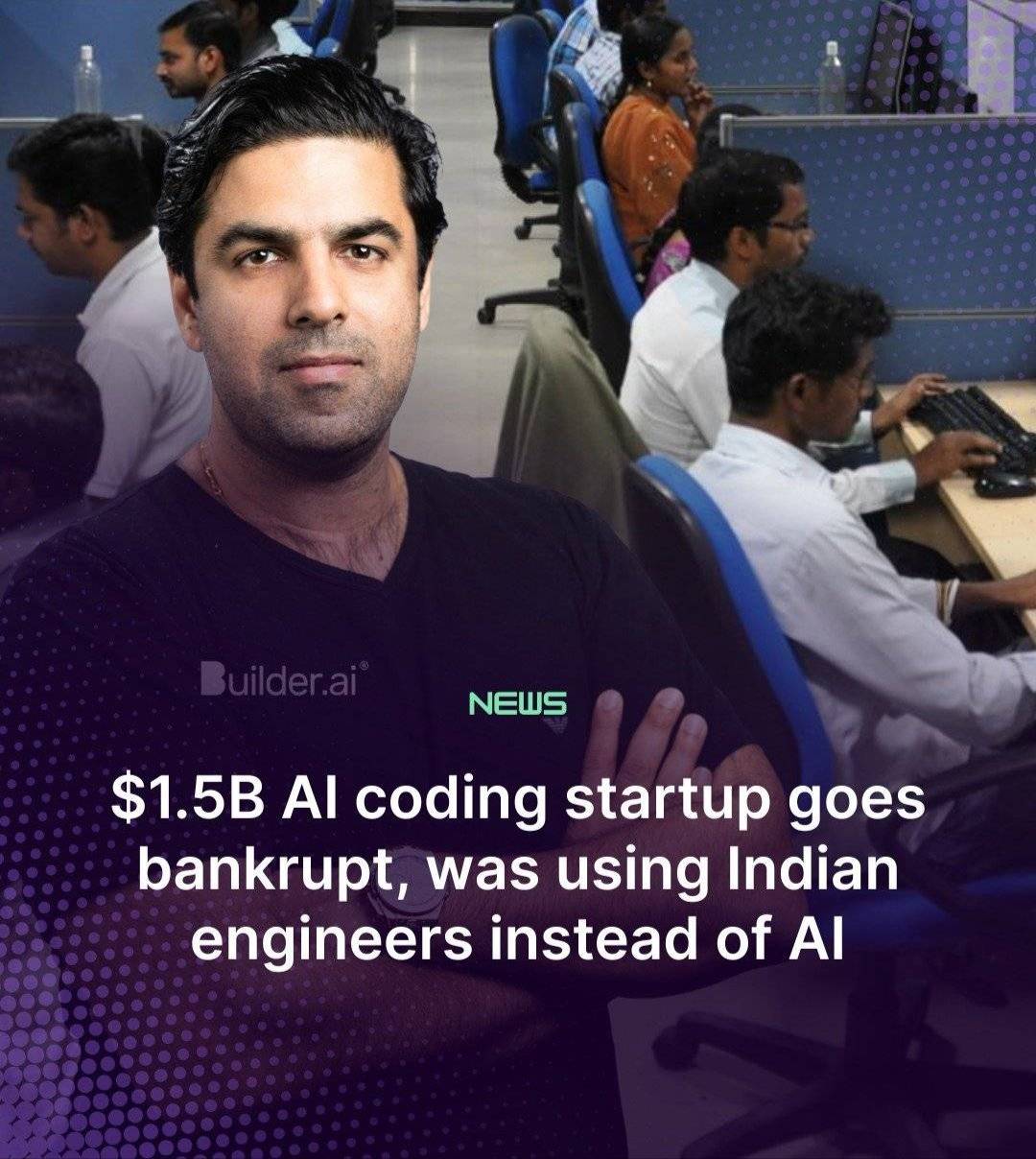
But guess what investigations revealed, that Builder.ai relied on approximately 700 engineers in India to manually develop apps, while marketing these efforts as AI-driven .
The "Natasha" AI assistant was essentially a front for human developers; Internal operations were heavily dependent on manual coding, contradicting the company's AI narrative .
Did you know that founder Sachin Dev Duggal was implicated in a money laundering investigation in India related to a previous venture?
Initial Market Reaction:
- In May 2023, Builder.ai secured a significant investment of $250 million in a Series D funding round led by the Qatar Investment Authority, with participation from Microsoft and other investors, bringing its total funding to over $450 million.
- The company's promise of enabling users to build applications without coding resonated with the market's appetite for accessible tech solutions.
- The combination of substantial funding and strategic partnerships positioned Builder.ai as a promising player in the AI and no-code development space.
The Collapse: Rapid Fall of Dominoes
- Builder.ai engaged in duplicate invoicing with Indian firm VerSe Innovation (parent of Dailyhunt), to artificially inflate revenue figures between 2021 and 2024.
- This misrepresented financial health to investors and attracted regulatory scrutiny and damaged credibility.
- In early 2025, creditor Viola Credit seized $37 million from Builder.ai's accounts, leaving the company unable to meet payroll and operational expenses.
- CEO Sachin Dev Duggal stepped down in February 2025, replaced by Manpreet Ratia.
- The company filed for bankruptcy in multiple jurisdictions, including the UK, US, UAE, Singapore, and India.
Did you know that the company used logos of companies they hadn’t worked with and fake customer reviews to bolster credibility?

5 Mistakes to avoid burning $1.5 Billions like Builder.ai
- Don't Oversell, EVER!!: Builder.ai aggressively positioned itself as a fully AI-powered platform, but reality behind the glossy marketing was that the heavy lifting was done manually by 700 engineers in India.
Takeaway: Misaligned messaging may buy you fundraising rounds but kills long-term credibility. In AI especially, investor and public skepticism is brutal once you’re caught overselling.
- Financial Discipline is never Optional: This artificially boosted their top-line numbers to secure more funding at higher valuations.
Takeaway: Artificial revenue inflation may secure temporary capital but leads to disastrous legal, reputational, and operational collapse.
- Don't ever Forsake Governance: Internal financial controls were weak, contributing directly to its inability to detect covenant breaches and liquidity risks early.
Takeaway: The faster you scale, the stronger your financial and operational governance needs to become.
- Don't sell Fluff in the name of AI: Builder.ai sold the illusion of AI while depending on human labor to deliver. Their AI narrative was mostly thin air, failing to deliver genuine ML or automation breakthroughs.
Takeaway: Times have changed, VCs and customers are now AI-skeptical. Be upfront about the models you use, and its corresponding data advantages.
- Don't cut corners in Ops Efficiency: Builder's failed to thrive on operational leverage. Its backend processes required massive human effort, and margins eroded as fast as they scaled.
Takeaway: Continuously invest in backend automation for merchants, APIs, and third-party app stores, reducing backend friction as much as you can.