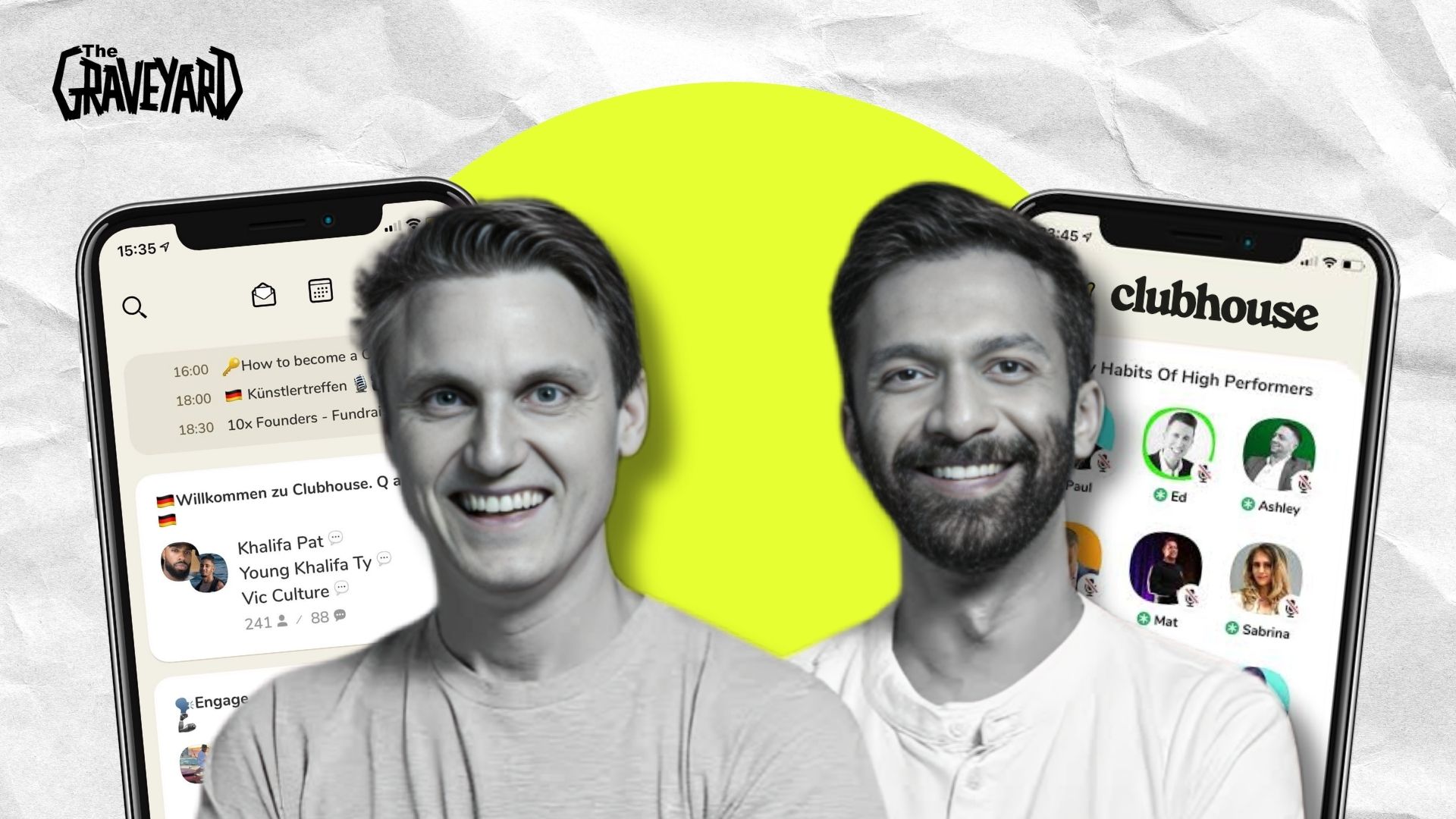
Did you know that research by the Stanford Internet Observatory discovered that Clubhouse's data was processed by a Chinese company called Agora, contrary to the common belief that it was managed within the United States?

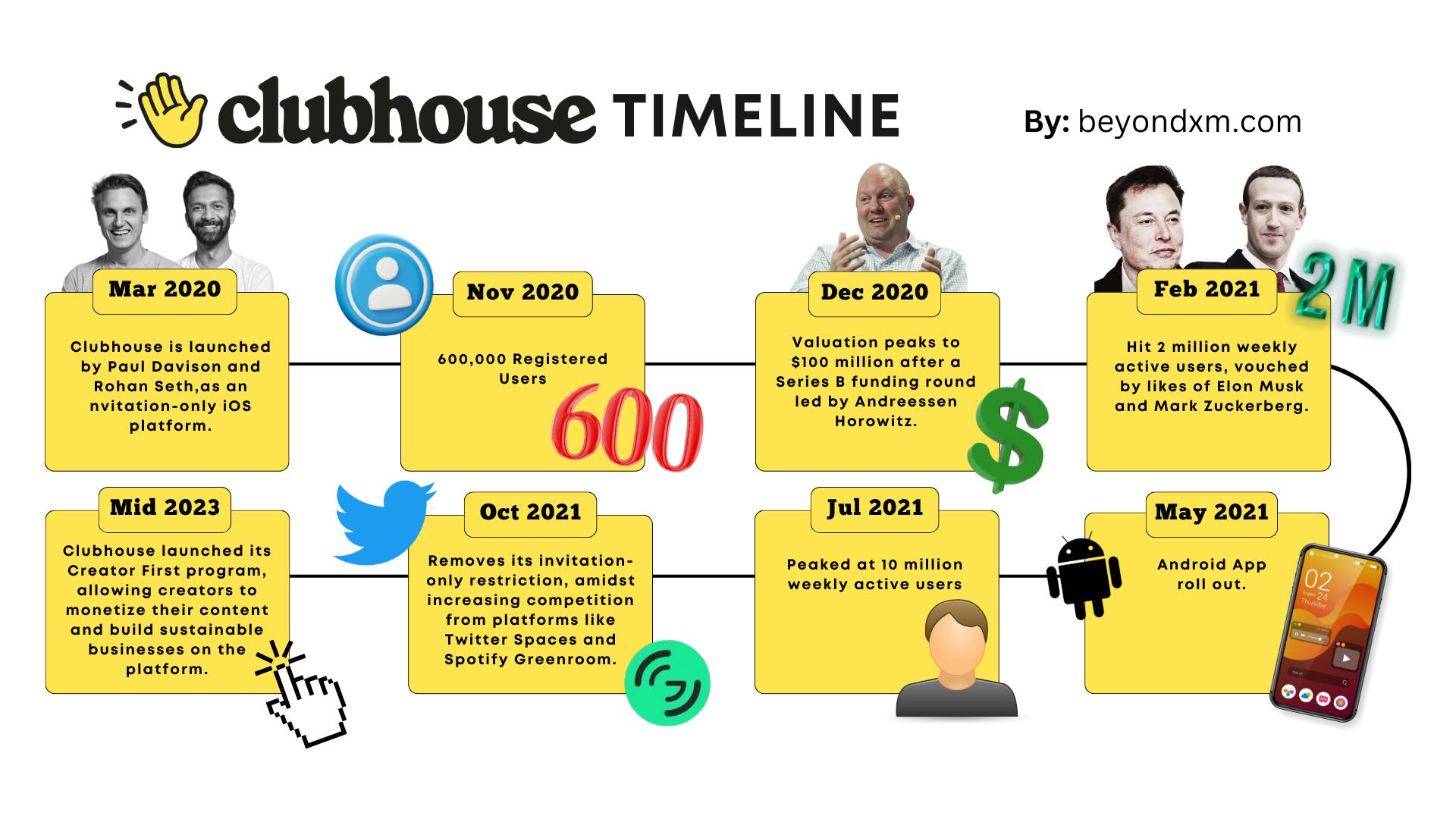
Clubhouse was invented by Paul Davison and Rohan Seth, in 2020 with a mission to foster genuine and spontaneous dialogue.
The platform was designed to create significant discourse in a virtual setting through Audio, addressing a gap they saw in the social media space.
What Made Clubhouse Unique?
- Clubhouse stood out by prioritizing voice interaction, offering a camera-free space for users to engage in live dialogue, thus reducing the stress of visual presentation.
- An invite-only approach was utilized, cultivating an air of exclusivity and drawing early interest from users.
Instant Fame:
- The app quickly made a following, particularly among tech enthusiasts, start up founders, and celebrities who appreciated its innovative nature and networking possibilities.
- Substantial venture capital was poured into the venture, including a Series B round headed by Andreessen Horowitz, taking its valuation above of $1 billion.
3 Reasons it Saw High User Adoption:
- Networking: Clubhouse emerged as a platform for professional growth, where users could chat with thought leaders, find mentors, and connect with like-minded professionals.
- Creative Community: The platform enabled content creators and influencers to thrive, creating engaging rooms, leading talks, and amplifying their brands.
- Partnerships Magnet: Clubhouse engaged in partnerships with brands and organizations, hosting sponsored events and discussions.
Wherever the Brand Went, Controversy Followed!:
- Clubhouse came under scrutiny for not encrypting its room conversations.
- The app’s contact upload requirement raised privacy concerns, potentially revealing unwanted connections such as those with an ex-partner or a harasser.
3 Major Flaws in Clubhouse's Strategy:
- Obsession with Exclusivity: The platform’s initial heavy reliance on its invite-only model may have hindered its expansion by restricting broader user adoption.
- Unclear Revenue Model: Clubhouse’s struggle to establish a stable revenue stream beyond investor funding, made it challenging for the company to scale beyond external funding.
- Moderation Oversight: The platform encountered significant obstacles in moderating content, with instances of misinformation, harassment, and privacy breaches leading to user attrition.
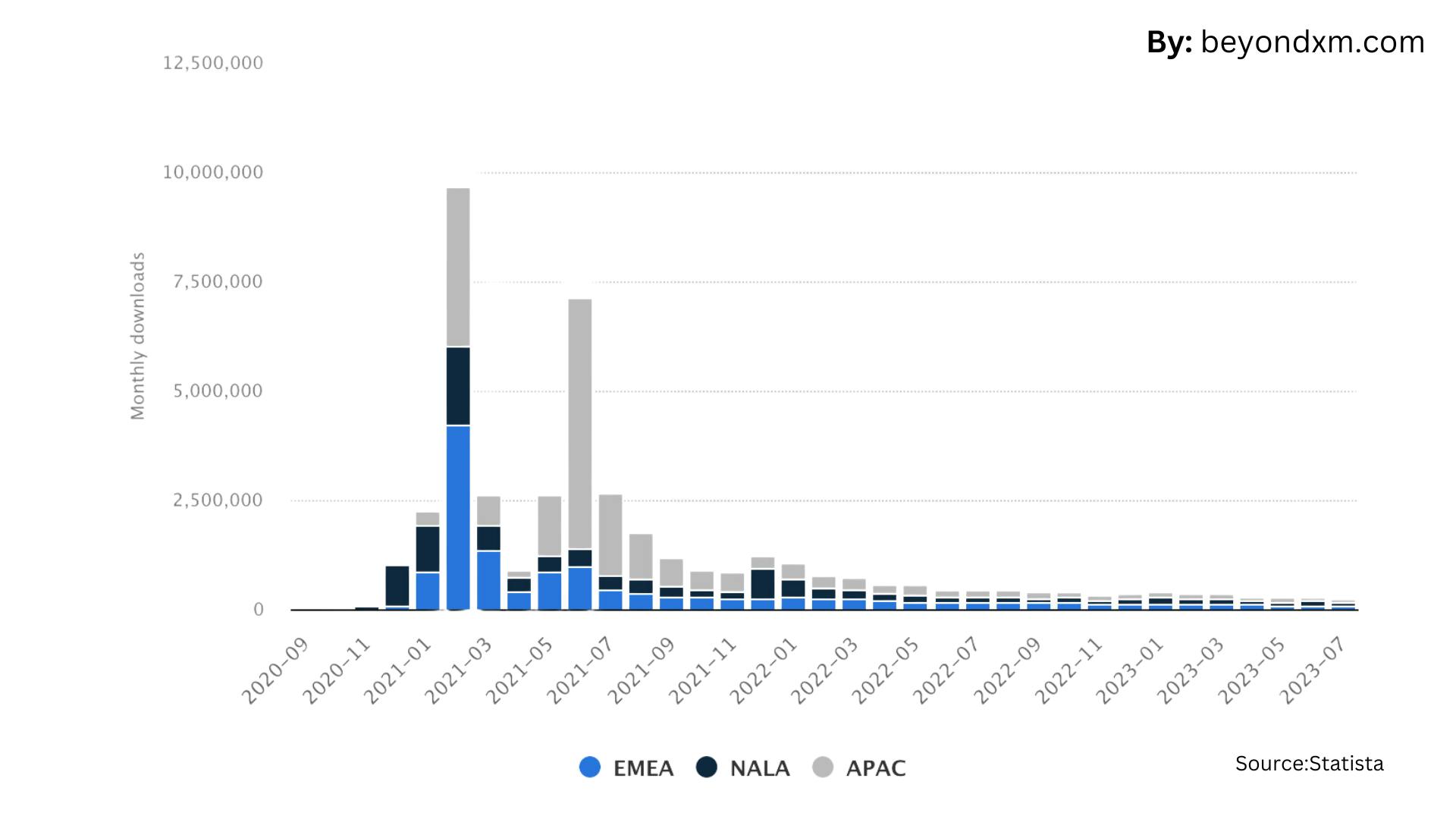
Monthly Decline of downloads from 2020-2023
5 Mistakes to Avoid, If You Want to Build a Billion-Dollar Brand:
- Entry Barrier: While the frenzy of exclusivity can spark interest, it can also impede growth. Start-ups should aim for a balance, offering distinctive benefits while maintaining accessibility.
- Revenue Deficit: It’s critical to build a revenue model from the start, rather than solely depending on investment capital, you can always focus on models like advertising and subscriptions to start with.
- Neglecting Moderation: Do not cut corners in content moderation, do invest heavily in robust content moderation systems to foster a safe and welcoming platform for all users, especially in community building.
- Neglecting User Retention: Think of creative ways you can engage with your user, by providing additional features, participation incentives, and fostering impactful connections.
- Ignoring Feedback: Clubhouse’s significant oversight was the neglect of customer feedback on safety which led to significant user attrition. Start-ups need to remain agile while constantly evaluating user data, seeking feedback, and refining their product.