
Did you know that, at one point, Cerberus Capital Management, Steward’s private equity backer, received approximately $800 million in dividends primarily through sale-leaseback real estate deals?
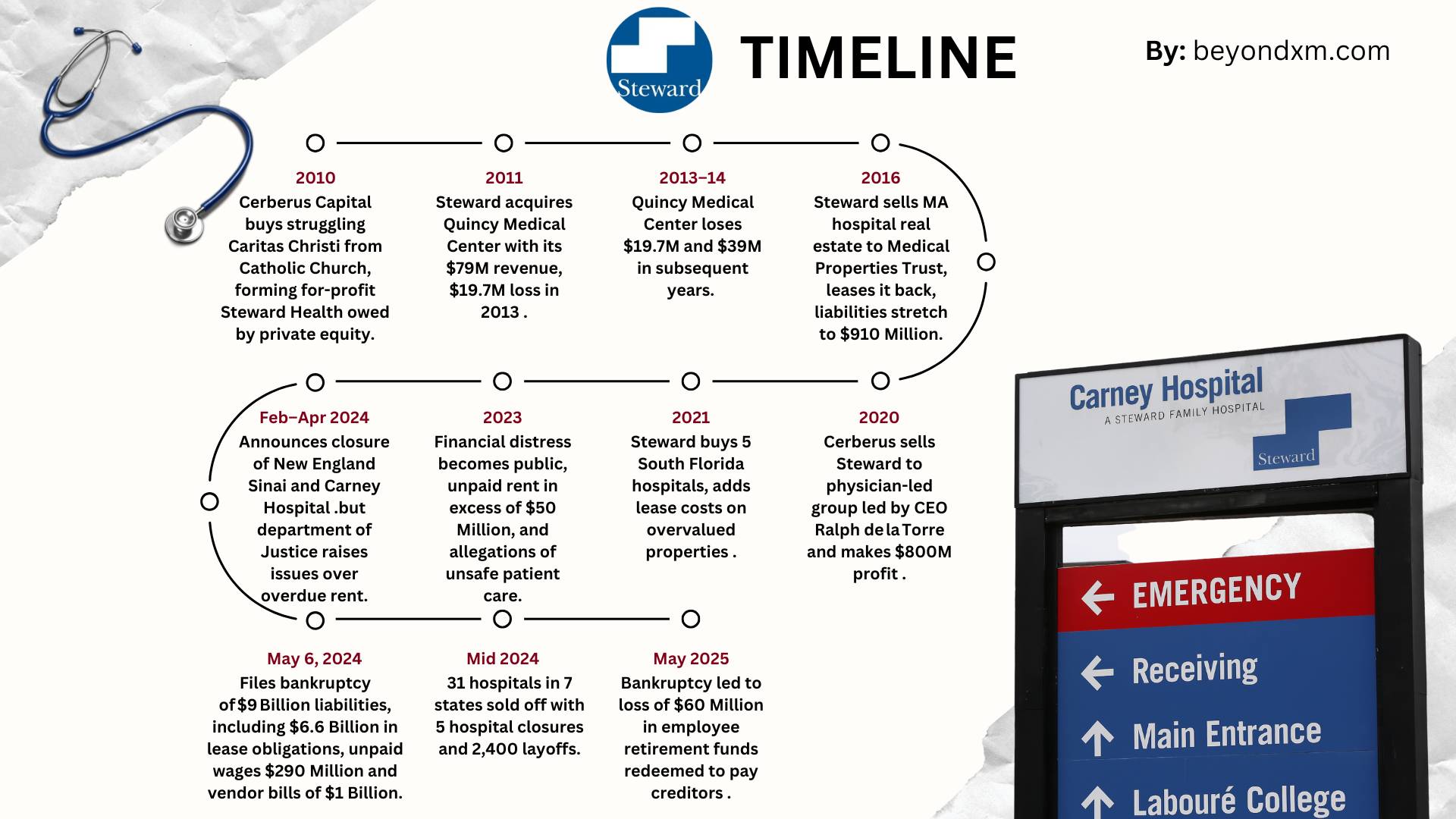
Steward Health Care, once America's largest private for-profit hospital network, is now a cautionary tale of rapid growth, unchecked leverage, and misaligned incentives, hence making entry into our Hall of Shame for "Blast from the Past".
Dr. Ralph de la Torre, a heart surgeon who spearheaded the company's transition from a non-profit hospital system (Caritas Christi) to a for-profit healthcare network under Cerberus Capital Management, is often hailed as the founder for Steward Healthcare.
Did you know that before becoming an executive, Dr. de la Torre was a leading heart surgeon at Boston's Beth Israel Deaconess Medical Center?
Unique Value Proposition:
- Acquisition with Fresh Capital: Cerberus Capital Management acquires the struggling Caritas Christi Health Care, transitioning it into the for-profit Steward Health Care under Dr. Ralph de la Torre.
- Strategic Partnerships: Steward quickly expands by acquiring institutions such as Quincy Medical Center and Morton Hospital, funding this growth through innovative sale-leaseback real estate deals.
- Operational Profitability: Steward achieves profitability through aggressive cost-cutting, freeing resources for ambitious national expansion.
Did you know that Steward even tried expanding internationally, including partnerships in Malta and Saudi Arabia?

Rapid Expansion & the Asset-Light Gamble (2016–2019)
- 2016–2017: Steward executes a massive $1.25 billion sale-leaseback deal with Medical Properties Trust (MPT), producing nearly $800 million in dividends for Cerberus and insiders.
- 2017: Acquiring 26 hospitals from Community Health Systems and Iasis, Steward ascends as the largest private, for-profit hospital network, generating approximately $8 billion in revenue.
- 2018: Steward relocates its headquarters to Dallas, signalling an aggressive expansion strategy heavily reliant on real estate monetisation.
Triggers for Slowdown:
- The COVID-19 pandemic triggers a $408 million net loss, exacerbating Steward's precarious financial position.
- Steward's leveraged asset-light strategy spirals into significant annual liabilities ($350 million rent plus mounting debt), stretching finances beyond recovery.
- Operational cracks emerge: Regulatory investigations surface, highlighting unsanitary conditions and declining patient care standards at multiple hospitals.
Final Collapse:
- 2023: High-profile incidents including fires, hospital closures, unpaid salaries, and vendor lawsuits, underscore Steward’s operational meltdown.
- May 2024: Steward files for Chapter 11 bankruptcy, citing roughly $9 billion in liabilities, significantly impacting 30,000 employees.
- June 2025: Legal scrutiny intensifies as litigators claim over $1 billion was improperly diverted to Cerberus and insiders amidst insolvency.
5 Mistakes which turned an $8 Billion empire into a $9 Billion collapse
- Asset Light to Asset Blind: Steward's real estate transactions initially fuelled growth, but rent burdens eclipsed operating margins.
Monetize assets strategically to enhance, not replace core profitability.
- Build Financial Discipline: Steward’s commitments spiraled into unsustainable financial obligations amid unforeseen events like COVID-19.
Stress-test strategic leverage under worst-case scenarios before committing.
- Don't Shit where you Eat: Massive insider withdrawals amid financial distress triggered regulatory scrutiny for Steward Healthcare.
Robust oversight and clear fiduciary duties are critical, especially under private equity ownership.
- Build Operational Efficiencies: Declining patient care and safety led to reputational damage and regulatory intervention, in the latest years if Steward.
Sustainable growth cannot compromise service quality; the cost of neglect is catastrophic.
- Contingency Planning is Crucial: Steward was reactive rather than proactive in crisis, resulting in chaotic restructuring.
Build robust "Plan B" strategies, M&A, carve-outs, and restructuring options, well before crises strike.