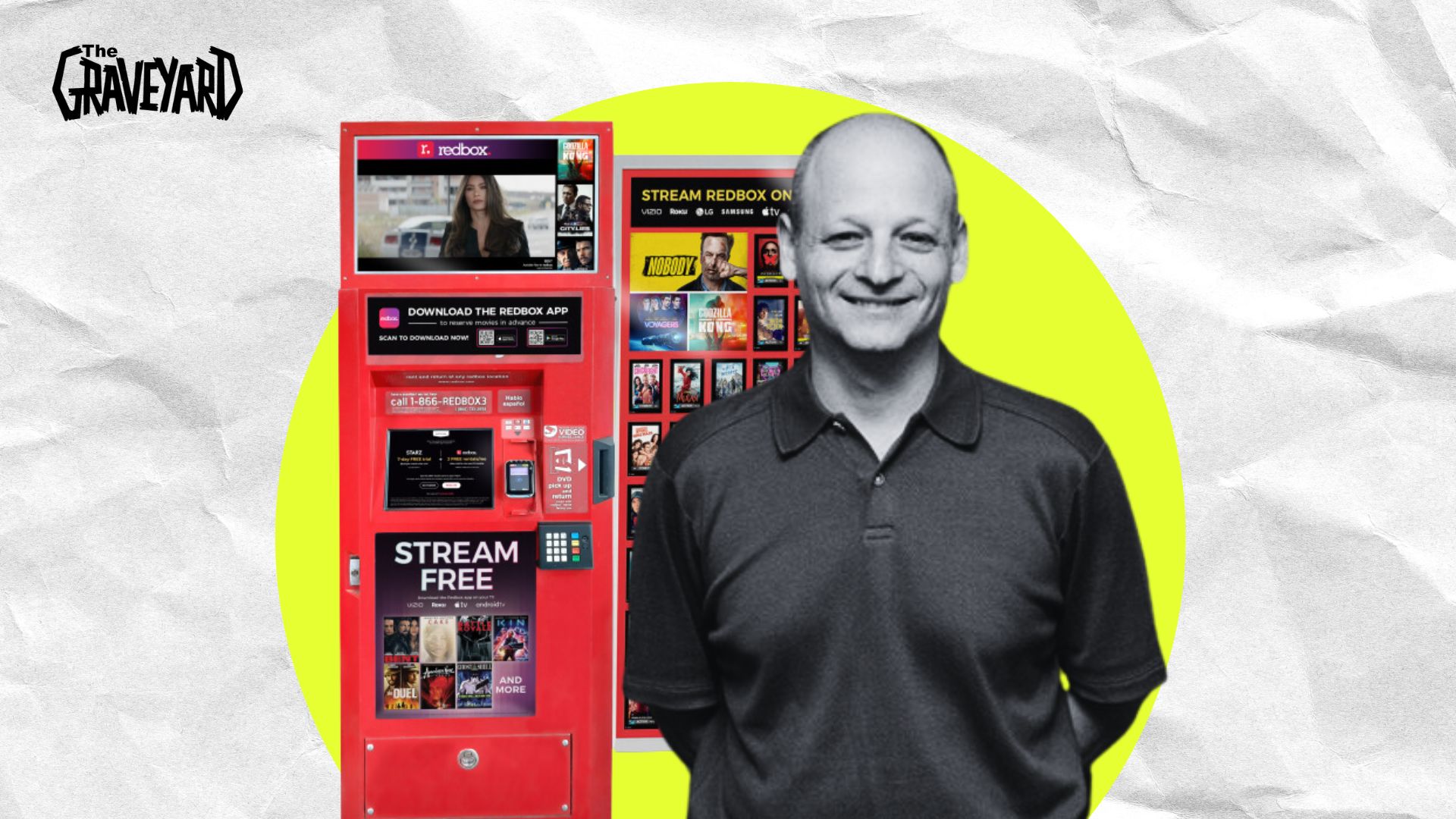
Did you know that before shutting down, Redbox had rented more than 5 Billion movie rental disks?

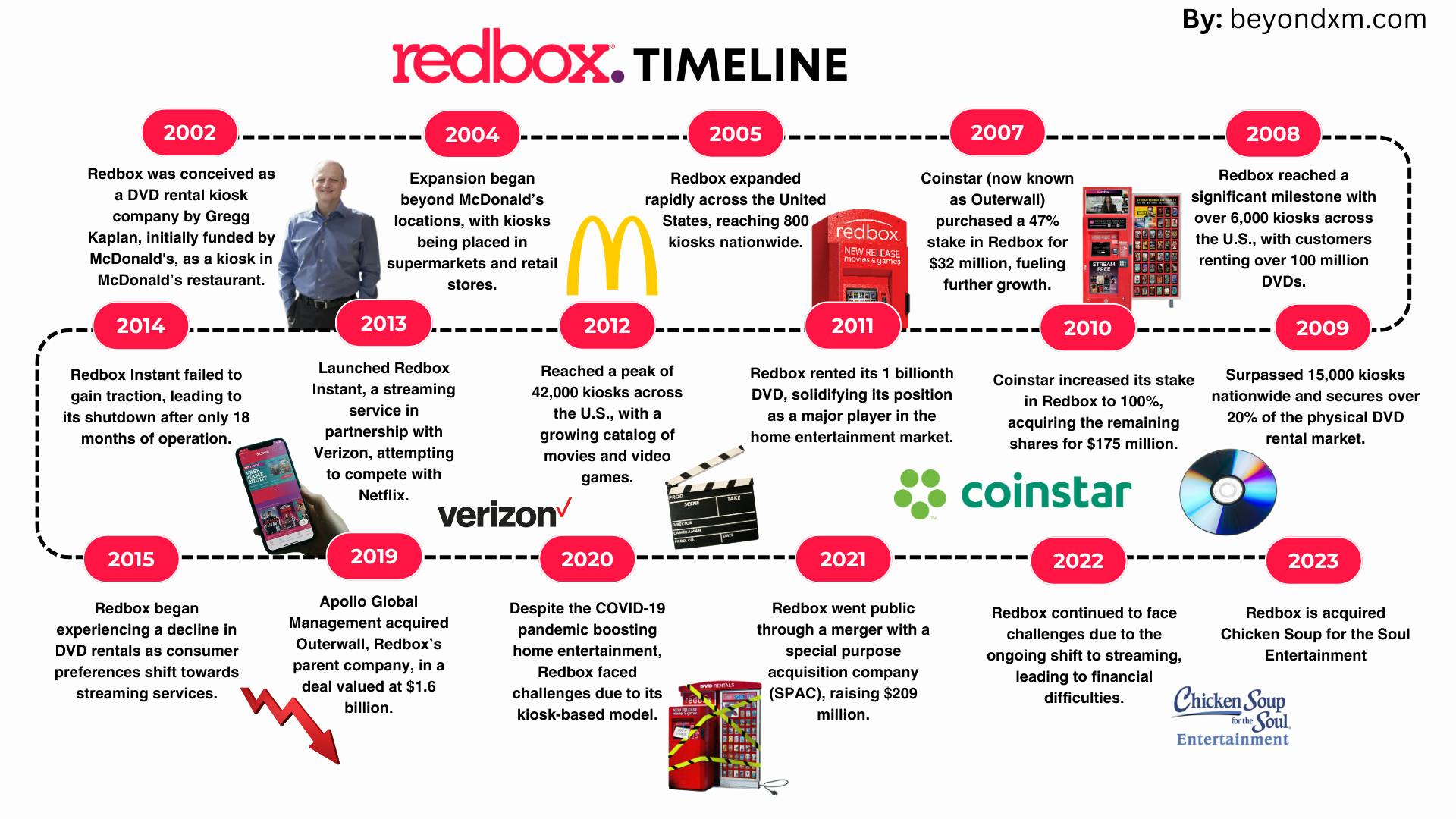
Redbox was built in 2003 by Gregg Kaplan, who wanted to create a more convenient and cost-effective experience for clients to rent DVDs.
The main idea was to distribute DVDs using vending machines which would captivate the audience. These kiosk vending machines aimed to provide a selection of movies at low prices without the penalty of a late fee.
Greg wanted to put them in strategic places like grocery stores and convenience stores.
Perceived Unique Value:
Redbox allowed customers to rent DVDs for a flat fee for a day, with the flexibility to operate 24 hours a day.
Through collaboration with big-time retailers such as Walmart, Walgreens, and Kroger, it introduced its kiosks in high-traffic areas, making rental and return easy.
Market Traction:
- Within Just 2 years of its operation, Redbox set up 1,500 kiosks nationwide, signaling market validation of its model.
- The next year, Company achieved its first significant financial milestone with a reported annual revenue of $70 million.
- And the year after that, in 2006, it surpassed 10,000 kiosks.
- Low rental fees and the convenience of its kiosks attracted millions of customers who preferred its easy, no-frills approach to DVD rentals.
Key Financial Indicators
- Redbox clocked over $1 Billion in revenue, attaining its biggest revenue peak in 2011.
- At this its estimated that it had 50 Million subscribers for its services and 35000 kiosks.
- However this started changing towards the end of 2014-2015, Redbox never crossed the $1 billion mark again and in fact it declined to $800 Million in 2016.
5 Key Challenges which killed the Billion Dollar Subscription Giant
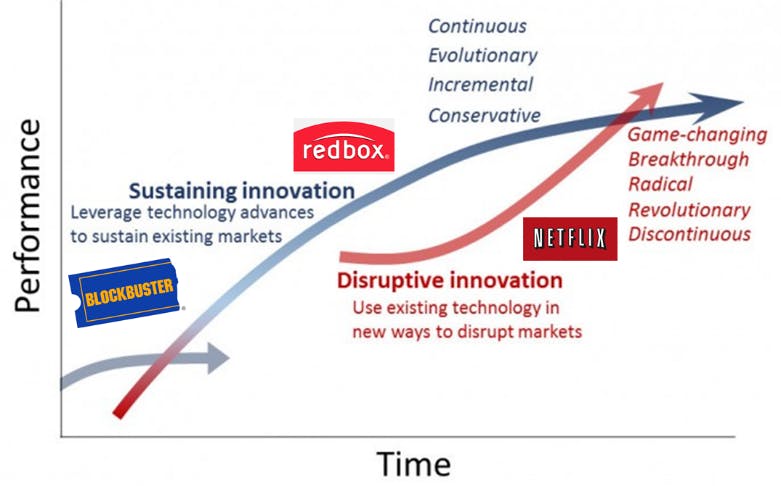
- In Spite of a good run for over a decade, Redbox started facing challenges in adapting to online viewing behavior of the consumers.
- It repeated a similar story like Blockbuster and pushed more money into competing with Netflix through half-baked platforms, which only worsened the problems.
- The rapid spread of digital streaming services such as Netflix and Hulu Changed the DVD rental market overnight, forcing the existing players to reinvent.
- Redbox tried to adjust by introducing a digital streaming service, but it was a half-baked product shipping.
- Redbox’s pricing model, while initially attractive, struggled to compete with the growing availability of subscription-based streaming services offering a broader content library at competitive prices.
5 Lessons to Avoid Losing $1 Billion Revenue like Redbox
- Agile Market GTM: Adapt to evolving market trends and adapt your business model accordingly. Redbox’s slow response to the rise of digital streaming services contributed to its decline.
- Product Diversification: Diversify your product or service offerings to mitigate risks associated with market shifts. Redbox’s over-reliance on physical DVDs limited its ability to compete with digital alternatives.
- Continuous Innovation: Build a culture of continuous innovation to stay ahead of competitors. Lack of innovation framework in its core business model hindered Redbox’s ability to compete in the digital age.
- Track Competition: Be proactive in responding to competition. Redbox’s failure to effectively address competition from streaming services impacted its market position.
- Embrace Technology: Embrace Technology early to stay relevant in a rapidly changing market. Redbox’s late response to digital streaming was insufficient to counteract the dominance of established players.